
What Are Kitchen Smart Devices — and Why Do They Matter in 2026?
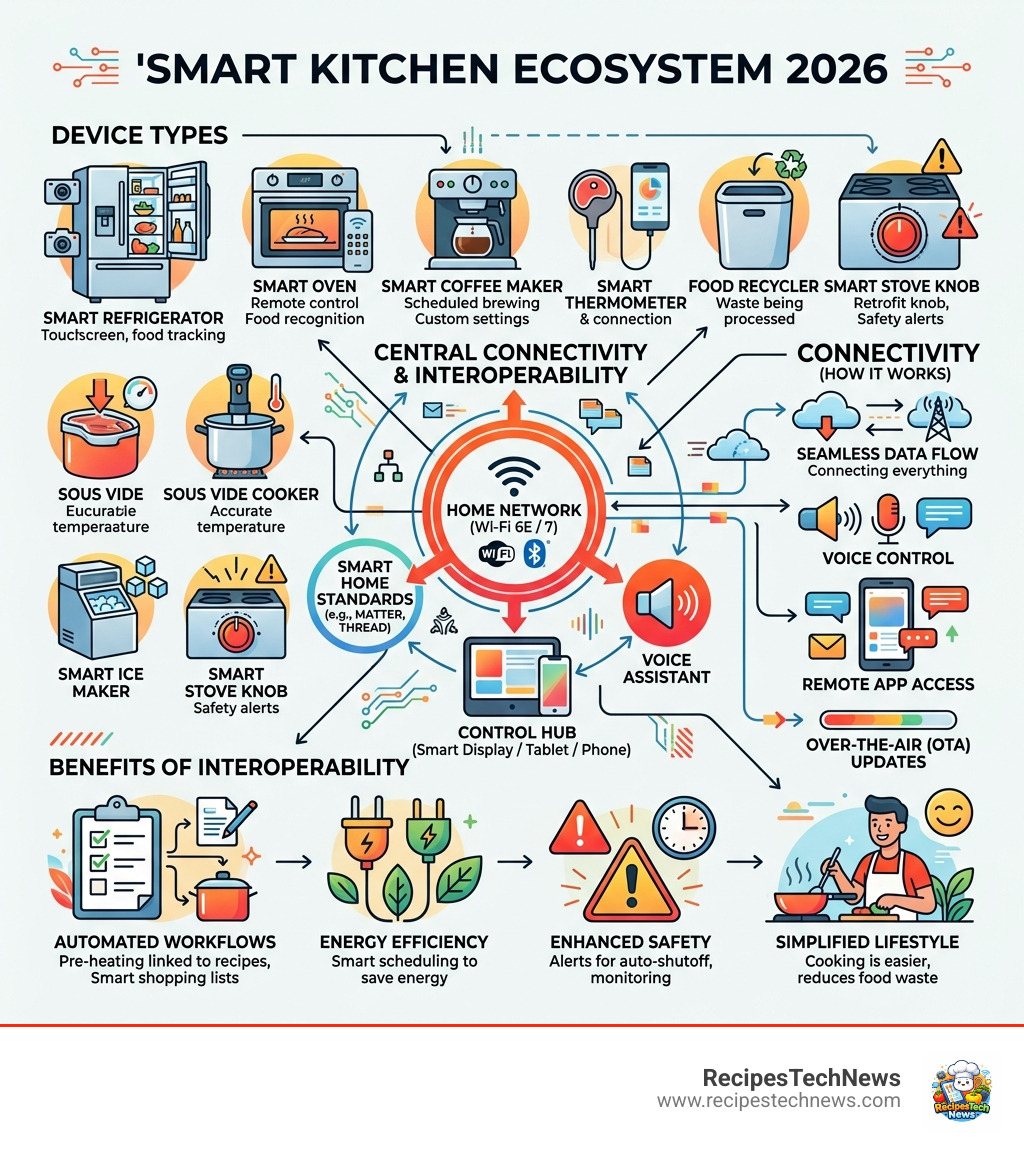
Kitchen smart devices are internet-connected appliances and gadgets that you can control, monitor, and automate — often from your phone or with your voice.
Here’s a quick look at the most popular categories in 2026:
| Device Type | What It Does | Example |
|---|---|---|
| Smart Refrigerator | Touchscreen, food cameras, grocery lists | Samsung Family Hub |
| Smart Oven | Remote preheat, food ID, multi-mode cooking | June Oven, Tovala |
| Smart Thermometer | Wireless temp monitoring via app | KitchenAid Smart Thermometer |
| Smart Coffee Maker | Scheduled brewing, grind customization | xBloom Studio |
| Sous Vide Cooker | Precise water-bath cooking via app | Anova Precision Cooker |
| Food Recycler | Converts scraps to plant food | Lomi |
| Smart Ice Maker | Voice-controlled, self-cleaning | Ecozy Nugget Ice Maker |
| Smart Stove Knob | Retrofits any stove with auto-shutoff | Ome Smart Knob |
The kitchen has quietly become one of the best rooms in the home for smart technology. From large appliances like fridges and ovens to small countertop gadgets, connected devices are changing how people cook, shop, and even handle food waste.
But the picture isn’t all perfect. As one smart home journalist put it after three years of living with a fully connected kitchen: “the technology hasn’t completely fulfilled its potential.” Siloed apps, brand incompatibility, and finicky Wi-Fi setups are still real frustrations in 2026.
That said, the gap between the hype and reality is closing fast — and for tech-savvy home cooks, the right smart kitchen setup can genuinely save time, reduce waste, and make cooking more enjoyable.
This guide breaks down the best devices, the real benefits, and how to build a smart kitchen that actually works for you.
Top-Rated Kitchen Smart Devices for 2026
As we move through 2026, we’ve seen a shift from “gimmicky” tech to appliances that actually solve daily problems. The centerpiece of many modern homes remains the smart refrigerator. The Samsung Family Hub continues to lead the pack with its massive 21.5-inch touchscreen. It’s no longer just a place to post digital sticky notes; it’s a command center that manages your calendar, streams music while you meal prep, and even lets you see inside the fridge from the grocery store aisle so you never double-buy milk again.
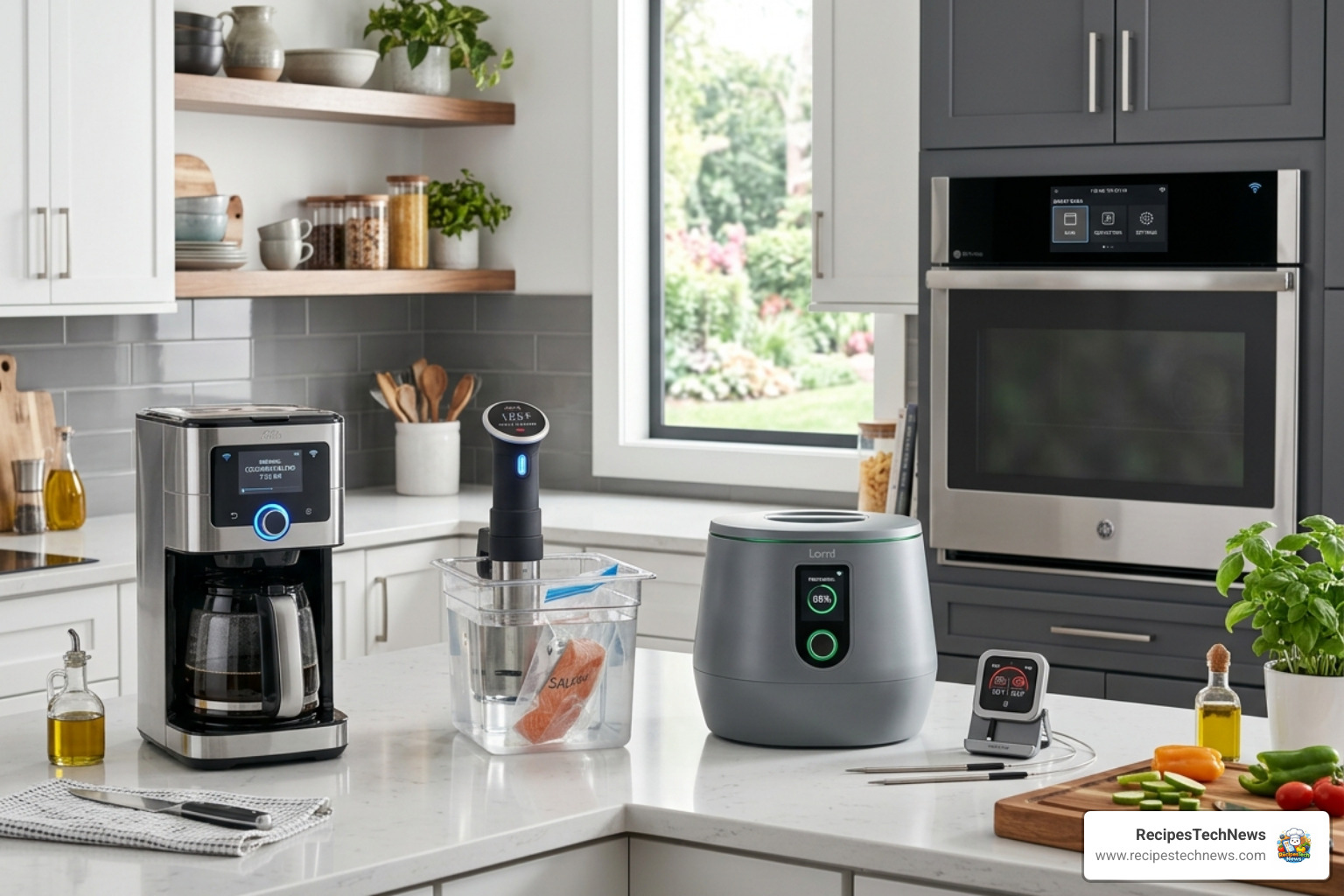
However, the real innovation is happening on our countertops. The June Oven: 12-in-1 Countertop Convection Oven has become a staple for those of us who want one machine to do everything. It’s a 12-in-1 powerhouse that acts as a convection oven, air fryer, grill, roaster, and more. What makes it truly “smart” is its internal HD camera and Food ID technology. When you slide in a tray of salmon or a tray of bagels, the oven recognizes the food and automatically suggests the perfect cooking program.
If you prefer a more guided experience, the Tovala Smart Oven is another top contender. It uses a unique “scan-to-cook” system. You can scan the QR codes on hundreds of grocery store items, and the oven will automatically set the time and temperature. For those looking to upgrade their permanent fixtures, the Smart Wall Ovens from KitchenAid offer a “world of possibilities” through modular attachments. You can swap in a powered grill, a baking stone, or a steamer attachment directly into a powered hub inside the oven.
For the professional-grade home chef, the Thermador range remains a high-water mark. By using the Home Connect integration, we can monitor our burners and oven temperature from another room, ensuring that a low simmer stays exactly where it needs to be without us hovering over the stove.
Precision Cooking and Coffee Innovation
Precision is the name of the game in 2026. The Anova Precision Cooker has made sous vide cooking—once a secret of high-end restaurants—accessible to everyone. By clipping this device to a pot of water, we can use an app to set the exact temperature for a perfect medium-rare steak. The app automates the process, notifying us when the water is ready and when the food is done.
Coffee lovers haven’t been left behind. The xBloom Studio is a marvel of autonomous engineering. It doesn’t just brew; it weighs the beans, grinds them to a specific micron size, and uses a programmed pour pattern to mimic a professional barista. It’s expensive, yes, but for those of us who treat coffee as a ritual, the customization is unmatched.
Speaking of texture and precision, if you are looking to complement your smart kitchen with perfectly textured sauces or smoothies, check out The Ultimate Guide to Silky Smooth Blender for tips on getting the most out of your high-tech blending gear.
| Feature | Anova Precision Cooker | xBloom Studio |
|---|---|---|
| Primary Function | Sous Vide / Water Bath | Coffee Grinding & Brewing |
| Connectivity | Wi-Fi / Bluetooth App | Extensive App Programming |
| Automation Level | High (Temp & Time) | Full (Bean to Cup) |
| Best For | Perfect Meats & Veggies | Gourmet Coffee Enthusiasts |
Safety and Maintenance of Kitchen Smart Devices
One of the biggest concerns with cooking is safety. This is where Ome Kitchen comes in. Their Smart Knob is a brilliant retrofit solution. Instead of buying a whole new stove, you replace your existing knobs with these smart versions. They feature auto-shutoff timers that can turn off a burner if it’s been left on too long—a feature that could prevent many of the fires that start in the kitchen. With a 4-month battery life and Alexa integration, it’s a simple way to add peace of mind to an older kitchen.
Maintenance has also gone digital. The Bosch 800 Series dishwashers are incredibly quiet, but their real value lies in remote diagnostics. If something goes wrong, the app can often identify the issue (like a drainage clog) before you ever have to call a repair technician. For more tips on keeping your tech running smoothly, explore our Blogs section.
Benefits of Integrating Smart Technology into Your Kitchen
Why bother with all this tech? The primary benefits are connectivity, automation, and interoperability. In 2026, we can walk into the kitchen and say, “Alexa, preheat the oven to 350,” or “Google, how much time is left on the dishwasher?” Hands-free operation is a lifesaver when your hands are covered in flour or raw chicken.
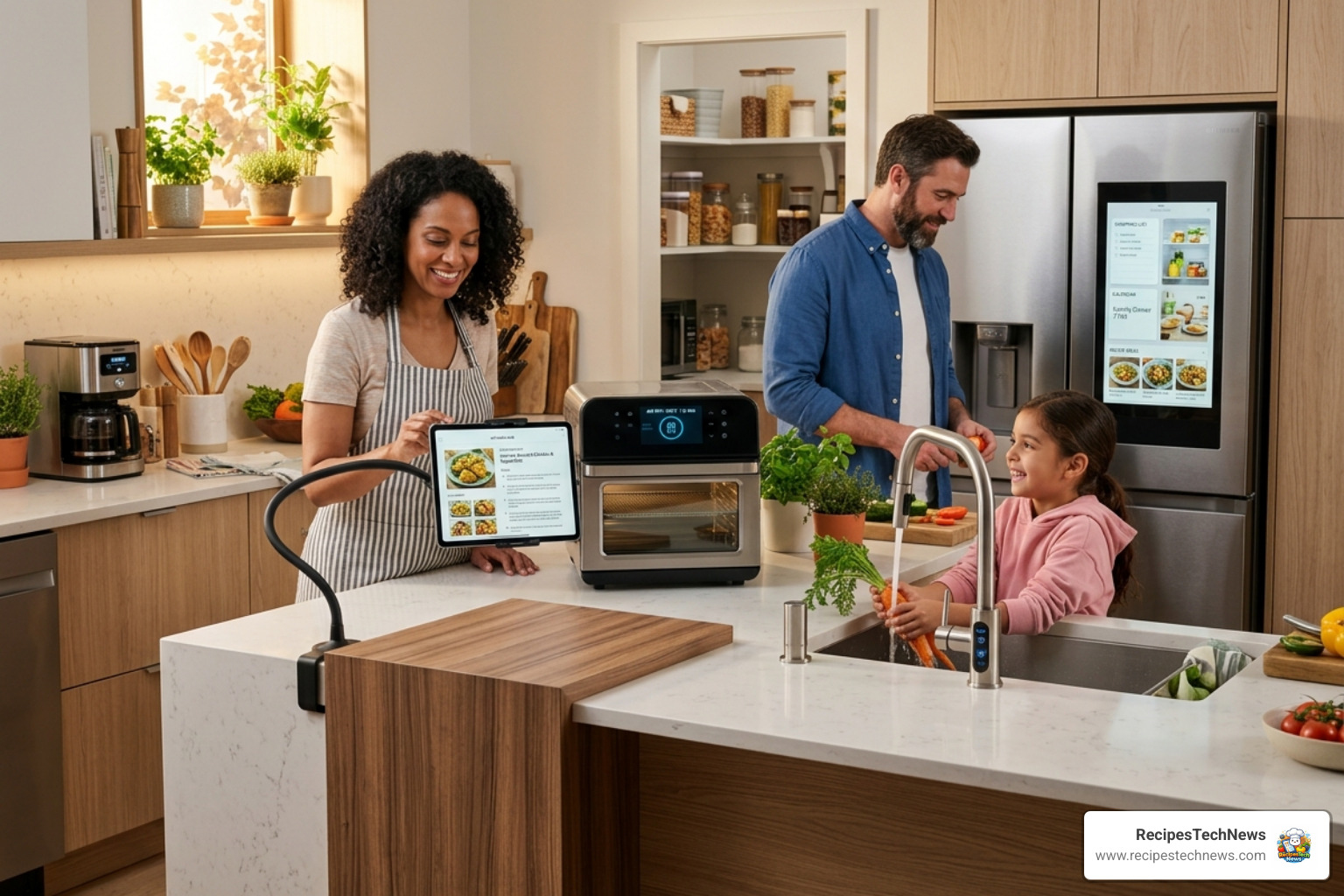
Beyond just voice control, these devices offer guided cooking. If you’re looking for inspiration, our Recipes category features many dishes that can be synced with smart appliances for step-by-step instructions. This ensures that even complex meals come out perfectly every time.
Efficiency and Convenience in Kitchen Smart Devices
Efficiency isn’t just about speed; it’s about accuracy. The KitchenAid® Smart Thermometer is a perfect example. With a 285-foot Bluetooth range, we can step out to the garden or relax in the living room while the roast is in the oven. The dual temperature sensors track both the internal meat temp and the ambient oven temp, sending real-time notifications to our phones when it’s time to flip the meat or take it out to rest. With a 24-hour battery life, it can handle even the longest BBQ smoke sessions.
Sustainability and Waste Reduction
In 2026, kitchen smart devices are also helping us live more sustainably. The Kitchen Countertop Food Recycler | Lomi has become a phenomenon, with over 215,000 happy households using it to turn food scraps into nutrient-rich plant food. It can reduce food waste volume by a staggering 80%, meaning fewer smelly trash bags and more “treasure” for your garden.
Even our ice makers have gotten smarter. The Ecozy Smart Nugget Ice Maker can produce up to 35 pounds of that “chewable” ice we all love every single day. It features energy-efficient cycles and self-cleaning modes that you can trigger from your phone, ensuring you never run out of ice during a party while minimizing water and power waste.
Overcoming Challenges in the Modern Smart Kitchen
It’s not all sunshine and perfectly toasted bread. The “smart kitchen” still faces hurdles. The biggest is ecosystem silos. Often, your Samsung fridge won’t talk to your Bosch dishwasher, and your June oven requires a completely different app than your coffee maker. This reliance on multiple apps can be exhausting.
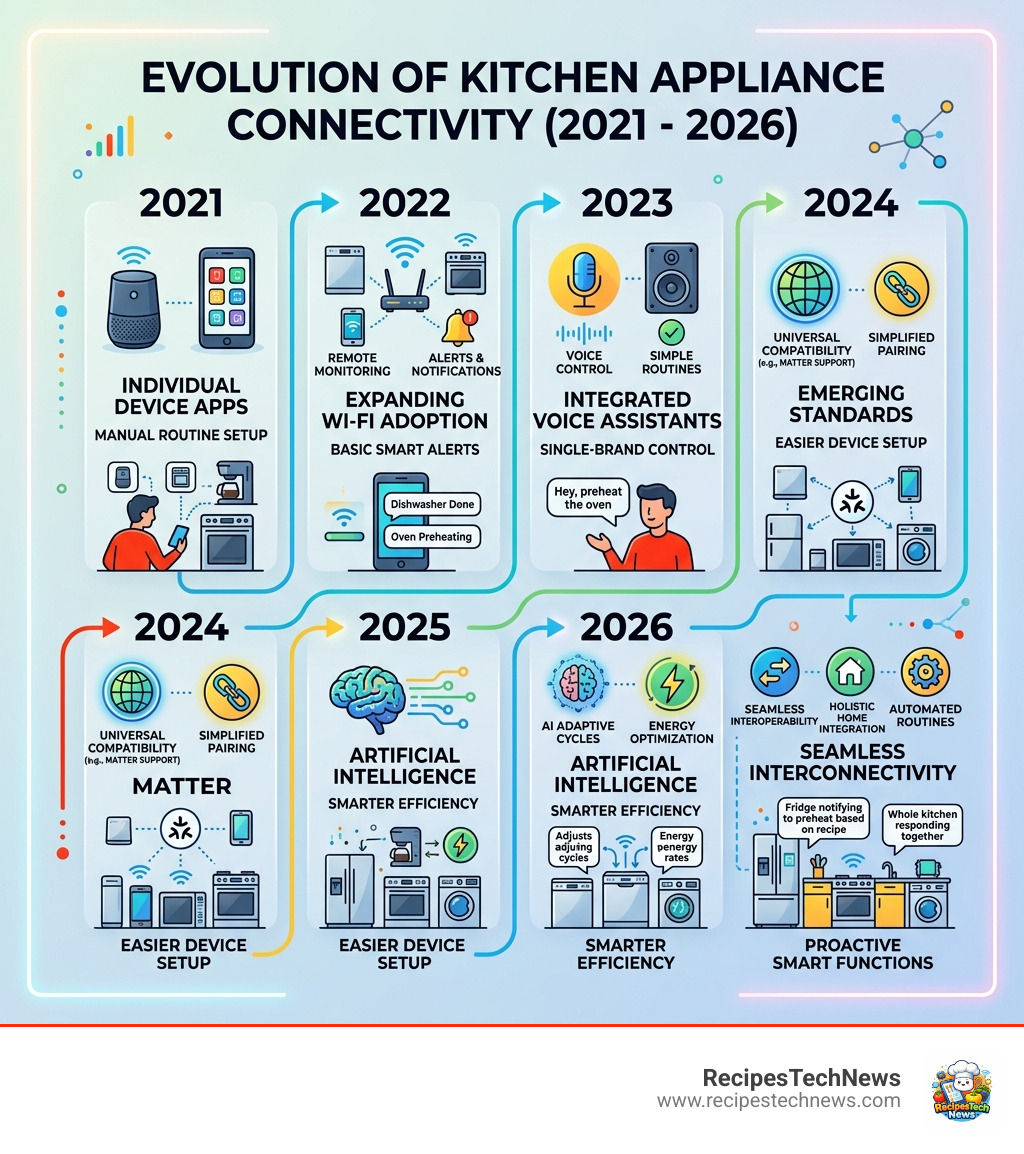
However, the industry is moving toward Matter support—a universal language for smart home devices—which promises to let different brands talk to each other seamlessly. We also have to consider Wi-Fi stability. If your router goes down, your “smart” oven might just become a very expensive paperweight unless it has reliable onboard manual controls.
Future Developments for Kitchen Smart Devices
What’s next? We expect to see even better AI food recognition. Imagine a pantry that knows you’re out of eggs and automatically adds them to your cart, or a stove with sensors that can detect if a pan is about to boil over and automatically lower the heat. Organizations like the Home Connectivity Alliance are working hard to ensure cross-brand interoperability, so your entire kitchen functions as one cohesive unit rather than a collection of individual gadgets.
How to Choose the Right Smart Appliances for Your Home
When you’re ready to dive in, don’t just buy the first shiny thing you see. Consider these steps:
- Space Optimization: Measure your countertops. Devices like the June Oven replace 12 appliances, which can actually save you space.
- Budget Allocation: You don’t need a $4,000 fridge to have a smart kitchen. Start with a smart thermometer or a smart knob.
- Compatibility: If you use an iPhone, ensure the device has a solid iOS app. Some devices, like the Ome Smart Knob, have historically launched on one platform before the other.
- Energy Star Ratings: Look for devices that offer energy-saving modes to offset the cost of the tech.
- Long-term Value: Choose brands that offer over-the-air software updates so your appliance gets smarter over time rather than becoming obsolete.
Frequently Asked Questions about Smart Kitchens
Which smart kitchen appliances offer the best value for money?
Entry-level air fryers and smart thermometers like the KitchenAid model offer the best “bang for your buck.” They provide immediate improvements to food quality for a relatively low investment. Additionally, food recyclers like Lomi can save money on trash bags and garden fertilizer over time.
How does AI improve the cooking experience in 2026?
AI now handles “predictive cooking.” It uses internal cameras to identify food and then applies optimized heating curves. If the AI sees your chicken is browning too quickly, it can adjust the convection fans or lower the temperature automatically to ensure the inside is cooked without burning the skin.
Can I turn my old stove into a smart appliance?
Yes! Products like the Ome Smart Knob allow for safety-first retrofitting. You can also use external temperature probes and smart plugs for smaller appliances to bring older gear into your voice-controlled ecosystem.
Conclusion
At RecipesTechNews, we believe the fusion of technology and lifestyle is the key to a modern home. Building a smart kitchen in 2026 is about more than just showing off gadgets to your friends; it’s about future-proofing your home, increasing your ROI, and—most importantly—making the time you spend in the kitchen more productive and fun.
Whether you’re starting with a single smart thermometer or a full suite of connected appliances, the goal is the same: to let the technology handle the guesswork so you can focus on the joy of cooking. For more updates on the latest in kitchen tech, keep following us at https://www.recipestechnews.com/.