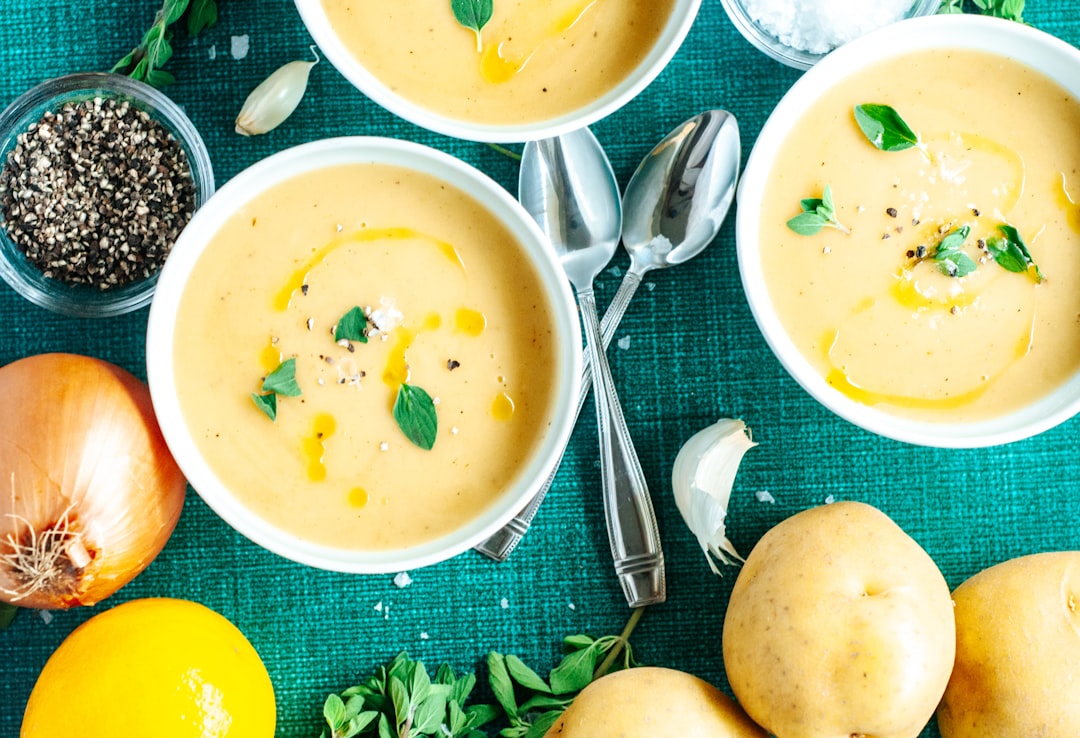
The Ultimate Guide to Silky Smooth Blended Soups
Why Immersion Blender Soup Recipes Belong in Every Home Cook’s Rotation
Immersion blender soup recipes are one of the fastest ways to get a creamy, restaurant-quality bowl of soup on the table — often in 30 minutes or less, with minimal cleanup.
Here are some of the most popular recipes you can make tonight:
- Carrot Ginger Soup — sweet, warming, and ready in under an hour
- Butternut Squash Soup — silky smooth with just a handful of ingredients
- Vegan Potato Leek Soup — thick, creamy, and totally dairy-free
- Roasted Cauliflower Soup — rich flavor, naturally thickened
- Roasted Tomato Soup — flexible, no-recipe cooking at its best
- Kitchen Sink Veggie Soup — use whatever vegetables you have on hand
- Carrot Curry Soup — spiced, vegan, and blended directly in the pot
- White Bean Tomato Soup — pantry-friendly and freezer-ready
- Roasted Red Pepper Soup — bold flavor, smooth texture
- Lentil Soup — high-fiber, filling, and allergy-friendly
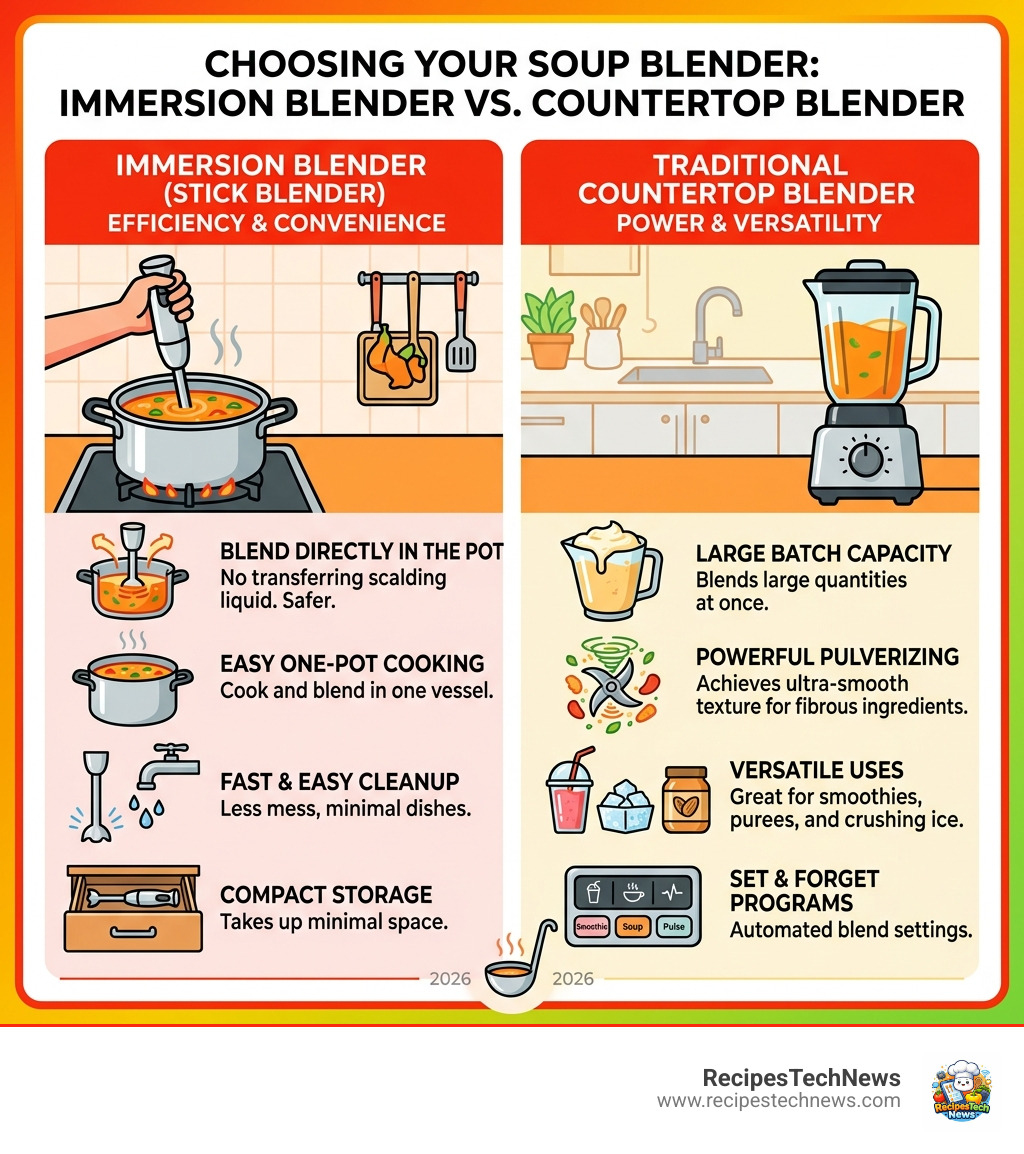
The beauty of a stick blender is simple: you cook everything in one pot, then blend it right there. No transferring scalding liquid to a countertop blender. No extra dishes. No mess.
Blender soups can come together in under 15 minutes with just a seasonal vegetable, an onion, some broth, and a few spices. That’s it.
Whether you’re a beginner cook or just want smarter weeknight dinners, this guide covers the best recipes, techniques, and tips to get the most out of your immersion blender.
The Best Immersion Blender Soup Recipes for 2026
As we move through 2026, the trend in home cooking is shifting toward “minimalist gourmet.” We want high-end results without the high-end hassle. Immersion blender soup recipes fit this lifestyle perfectly. By using seasonal vegetables and high-quality broth, we can create meals that feel indulgent but are actually packed with nutrients.
One of our favorite ways to approach this is through Immersion Blender Roasted Tomato Soup. This “no-recipe” style of cooking allows us to be flexible. You can coarsely chop whatever aromatic herbs and vegetables you have—bell peppers, celery, onions, or even a Fresno chile—and roast them with tomatoes, oil, and butter for about 90 minutes. Once roasted, you simply add stock and blend. It’s a one-pot meal that transforms refrigerator scraps into a vibrant, silky masterpiece.

Beginner-Friendly Immersion Blender Soup Recipes
If you are new to stick blenders, start with recipes that rely on starchy vegetables. These are forgiving and naturally create a thick consistency without needing heavy cream.
- Potato Leek Soup: This is the gold standard for beginners. The starch in the potatoes releases during blending, creating a velvety texture. For a vegan version, simply swap the butter for olive oil and use vegetable broth.
- Roasted Cauliflower Soup: Cauliflower is a “chameleon” vegetable. When roasted and blended, it becomes incredibly creamy. It’s a great way to sneak more fiber into your diet while feeling like you’re eating comfort food.
- Carrot Curry Soup: For a spiced, comforting option, this Carrot Curry Soup [Immersion Blender] | Vitamix is a winner. It uses simple seasonings like turmeric and curry powder. By sautéing the aromatics for 8-10 minutes and toasting the spices before adding broth, you build deep layers of flavor that the immersion blender then emulsifies into a silky liquid.
Quick 30-Minute Immersion Blender Soup Recipes
For those busy April weeknights in 2026, we often turn to “Kitchen Sink” recipes. These are the ultimate pantry-staple meals. You can take an onion, some cauliflower, carrots, and a stray potato, sauté them, simmer in broth for 15-20 minutes, and blend.
| Soup Type | Prep Time | Cook Time | Main Thickener |
|---|---|---|---|
| Kitchen Sink Veggie | 5 mins | 20 mins | Potato/Cauliflower |
| 15-Minute Green Soup | 3 mins | 12 mins | Spinach/Cashews |
| Quick Tomato Basil | 5 mins | 15 mins | Bread or White Beans |
| Broccoli Cheddar | 10 mins | 20 mins | Pureed Broccoli |
Rapid simmering is the secret here. By cutting your vegetables into smaller pieces, they cook faster, allowing you to get from “chopping block” to “blended bowl” in record time.
Essential Techniques for Pureeing Hot Soup Safely
Safety is paramount when dealing with hot liquids. We have all heard the horror stories of “soup explosions” from traditional blenders. While immersion blenders are much safer, they still require proper technique to avoid splatters.
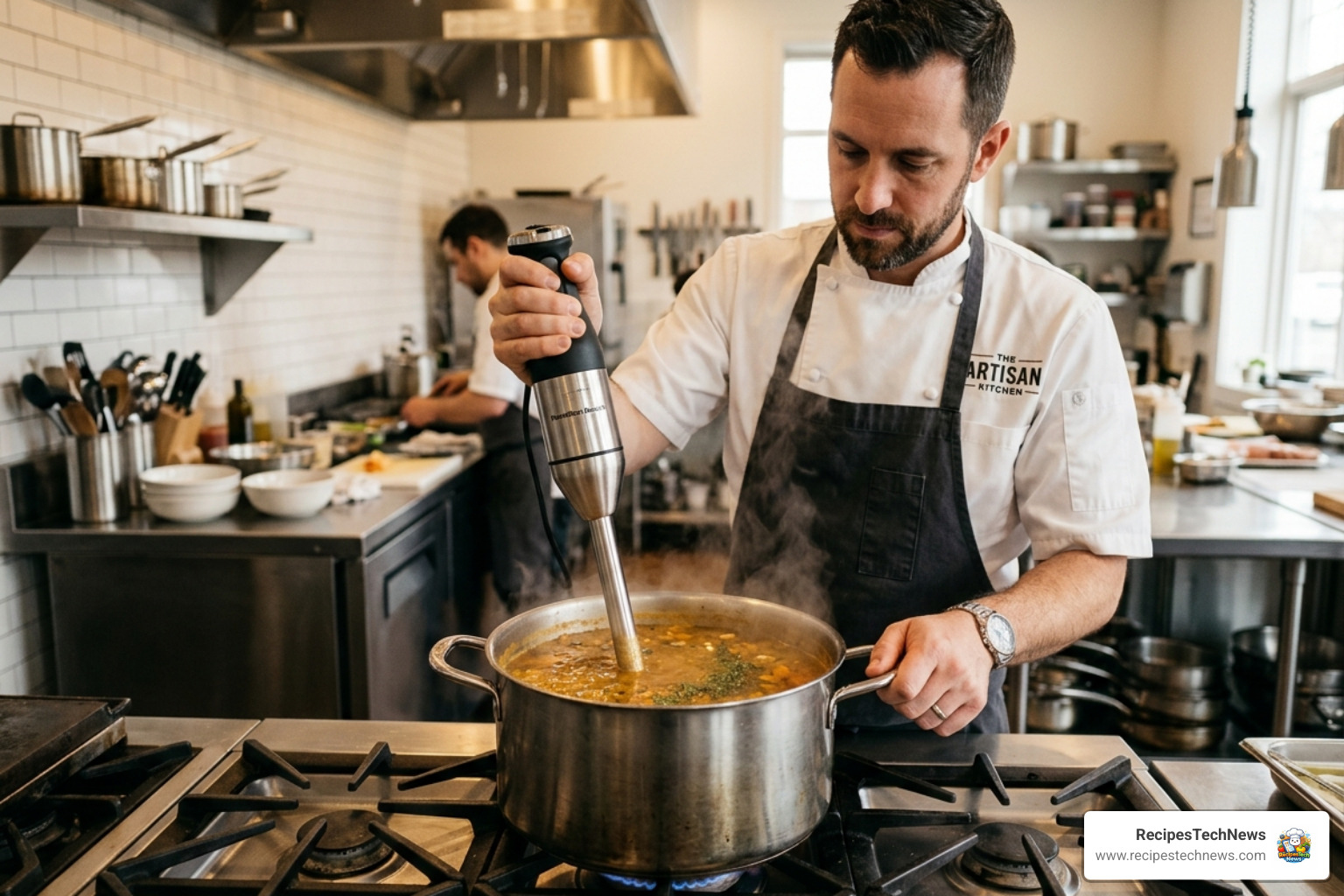
According to the experts at How To Puree Soup With Immersion Blender? – Easy Step-by-Step » Kitchendemy, the most important rule is blade submersion. Never turn the blender on until the blades are completely covered by the liquid. If the blades are exposed, you’ll end up painting your kitchen ceiling with carrot puree.
Our Top Safety Tips:
- Angle the Blender: Keep the blender at a slight angle rather than perfectly vertical. This helps create a vortex that pulls chunks toward the blades.
- Pulse Control: Start with short pulses to break up the large chunks before holding the button down for a continuous blend.
- Heat Management: While you can blend hot soup, it’s often wise to turn off the heat and let the soup sit for a minute or two to stop the active boiling before you begin.
- Move Slowly: Use a gentle sweeping motion. Don’t lift the blender head out of the liquid while it is spinning.
Achieving the Perfect Texture
Whether you want a “rustic chunky” chowder or a “silky smooth” bisque, the immersion blender gives you total control. For a rustic texture, only blend half of the pot, leaving some whole chunks of vegetables for contrast.
If you are aiming for professional-level smoothness but find your soup is a bit thin, there’s a clever hack: the bread trick. As noted in Make Silky Smooth Soup Without An Immersion Blender: Here’s How, adding a slice of torn-up bread to the pot before blending acts as a natural emulsifier, creating a lush, thick mouthfeel without the need for heavy cream.
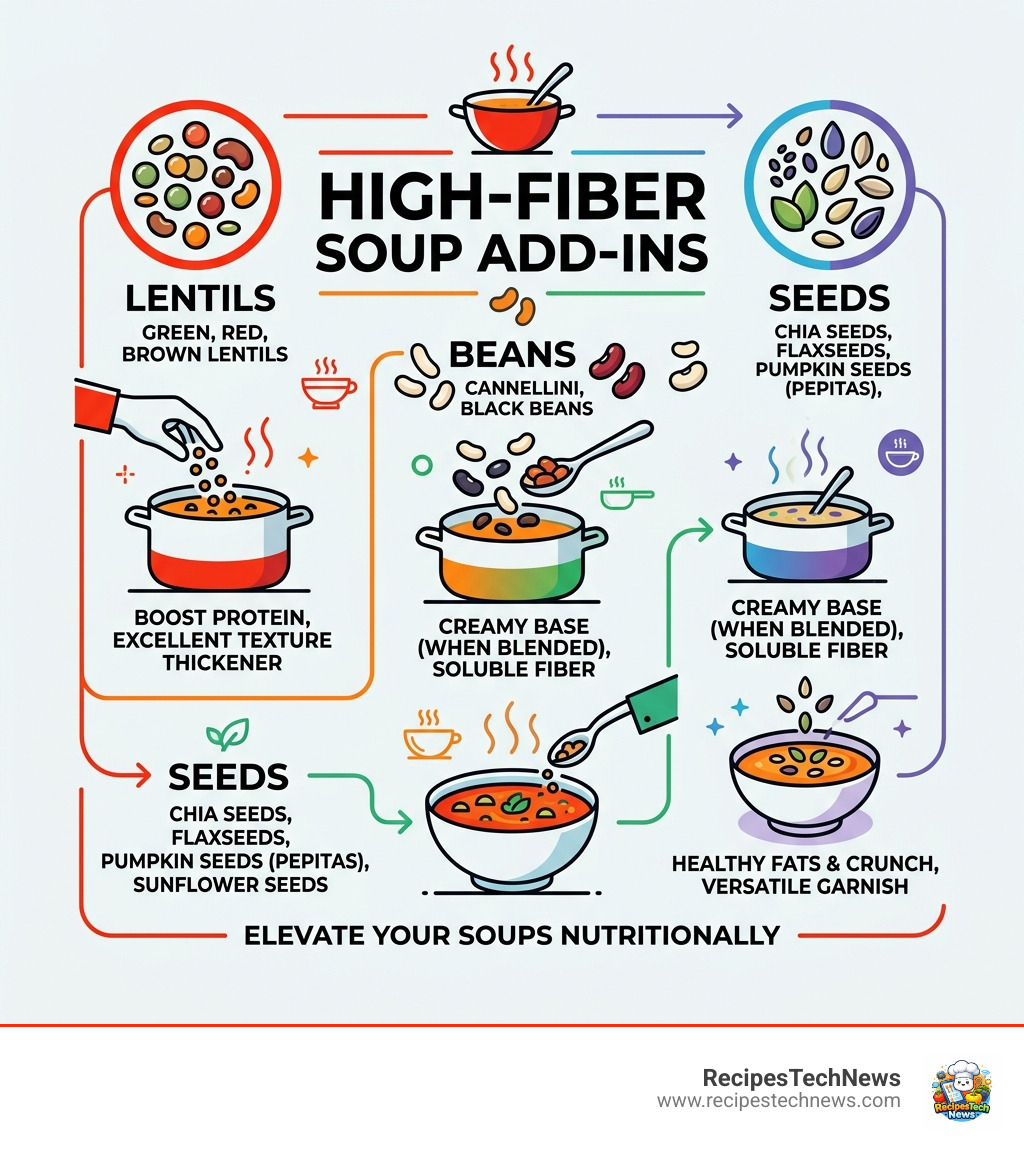
Alternatively, lean on starchy vegetables like potatoes, beans, or lentils. When pureed, these ingredients release natural fibers that thicken the liquid instantly. If the soup ends up too thick, simply whisk in a bit more broth or water until you reach your desired consistency.
Customizing Your Soup: Ingredients and Dietary Swaps
One of the best things about immersion blender soup recipes is how easily they adapt to dietary needs. In 2026, we are seeing a huge rise in alpha-gal friendly and vegan-forward cooking.
- Vegan Adaptations: Use coconut cream or cashew milk to add richness. Cauliflower is also a fantastic dairy substitute; when blended, it mimics the texture of a heavy cream base.
- Alpha-Gal Friendly: For those avoiding mammalian products, use vegetable or chicken broth (ensure it’s sourced correctly) and swap butter for high-quality olive oil or plant-based creams.
- Nut-Free Creaminess: If you can’t use cashews, white beans (like Cannellini) are a secret weapon. Toss a can into any vegetable soup before blending for a massive protein and creaminess boost.
Flavor Boosters and Garnishes
A blended soup can sometimes look a bit “plain” in the bowl. We eat with our eyes first, so garnishes are essential.
- Toasted Spices: Toasting your curry powder or turmeric in oil before adding liquids wakes up the essential oils and provides a more vibrant color.
- Roasted Garlic: Instead of sautéing raw garlic, try squeezing in a whole head of roasted garlic. It adds a mellow, caramelized sweetness that is unbeatable.
- Textural Contrast: Top your smooth soup with something crunchy. Think sourdough croutons, toasted pumpkin seeds, or even a few crumbles of feta cheese. A swirl of yogurt or a drizzle of herb-infused oil can also elevate the presentation from “home cook” to “executive chef.”
Choosing and Maintaining Your Immersion Blender
Not all stick blenders are created equal. If you plan on making immersion blender soup recipes a weekly staple, you need a tool that can handle the heat.
Key Features to Look For:
- Motor Power: Look for a wattage rating between 200 and 400 watts. This ensures the motor won’t struggle with tougher vegetables like carrots or squash.
- Wattage and Speed: Variable speed control is a plus, allowing you to start slow (to prevent splashing) and finish high (for that silky texture).
- Material: Stainless steel shafts are superior to plastic. They won’t stain (looking at you, turmeric!) and can withstand higher temperatures without warping.
- Ergonomics: Since you’ll be holding the device, an ergonomic handle with a non-slip grip is vital for comfort and safety.
Cleaning and Long-Term Maintenance
We love immersion blenders because they are so much easier to clean than countertop blenders. Most modern models have detachable shafts that are dishwasher safe.
Maintenance Tips:
- Clean Immediately: Don’t let soup dry on the blades. Rinse the attachment under hot water as soon as you’re done blending.
- The “Soap Spin”: For a deep clean, fill a tall jar with warm, soapy water and run the blender inside it for 15 seconds.
- Dry Thoroughly: To prevent rust, especially around the blade housing, dry the attachment immediately after washing.
- Motor Care: Never submerge the motorized handle in water. Simply wipe it down with a damp cloth if it gets splashed.
Frequently Asked Questions about Blended Soups
Does an immersion blender make soup thicker?
Yes! This is one of the primary benefits. By pureeing a portion of the vegetables (especially starchy ones like potatoes, beans, or cauliflower), you release natural starches and fibers into the broth. This creates a natural thickening effect without the need for flour, cornstarch, or heavy dairy.
Can I blend boiling hot soup directly in the pot?
While most high-quality immersion blenders are designed for hot liquids, we recommend a brief cooling period. Turning off the heat for 2-3 minutes allows the “rolling boil” to subside, which significantly reduces the risk of steam burns or accidental splatters. Always ensure the pot is deep enough that the blender head is fully submerged.
How do I avoid a grainy texture in vegetable soups?
Graininess usually comes from two things: undercooked vegetables or fibrous skins. To ensure a smooth result, make sure your vegetables are fork-tender before blending. If you’re using high-fiber veggies like asparagus or broccoli, consider peeling the woody stems or passing the final puree through a fine-mesh strainer for a truly professional finish.
Conclusion
At RecipesTechNews, we believe that the best technology is the kind that makes your life easier and your food tastier. The immersion blender is the perfect example of this tech-lifestyle fusion. It’s a simple gadget that unlocks a world of culinary innovation, allowing you to whip up healthy, delicious, and comforting meals with minimal effort.
Whether you’re clearing out the fridge with a “kitchen sink” soup or hosting a dinner party with a refined carrot curry, these immersion blender soup recipes are your ticket to success in the 2026 kitchen.
For more tips on modern kitchen gadgets and culinary guides, check out More info about our digital guides. Happy blending!