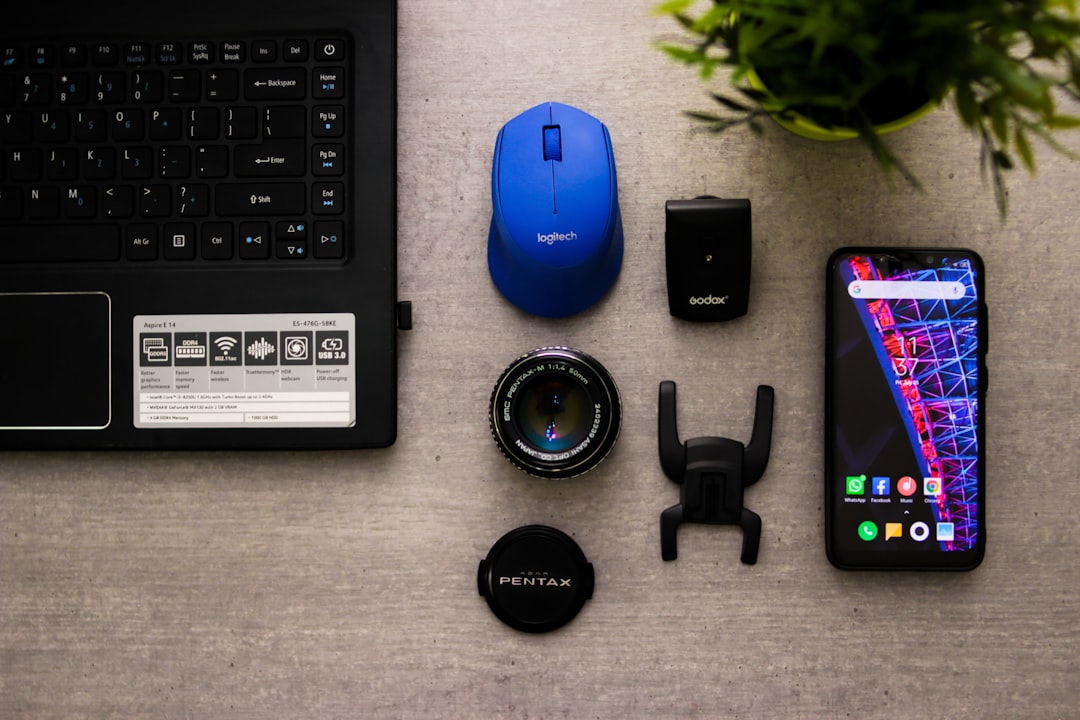
Why Gadget Reviews Matter Before You Buy
Gadget reviews are expert or hands-on evaluations of tech products that help you decide what’s worth your money — and what isn’t.
Here’s a quick breakdown of what good gadget reviews cover:
- Performance — Does the device do what it claims?
- Real-world usability — How does it hold up in everyday life?
- Value — Is the price justified compared to alternatives?
- Pros and cons — Honest trade-offs, not just marketing speak
- Who it’s for — The right gadget for the right person
Think about the last time you spent $500 or more on a piece of tech. Did it live up to the hype?
That’s exactly the problem gadget reviews exist to solve.
The consumer tech market moves fast. New smartphones, laptops, robot vacuums, and smart home devices launch every week. Without independent, tested evaluations, it’s easy to get burned by flashy specs that don’t translate to real-world results.
Some of the most established names in tech journalism — outlets that have invested hundreds of thousands of hours in hands-on testing — have built their entire reputations on answering one simple question: does this thing actually work?
And it’s not just about individual products. A significant investigation found that 75% of reviews in 24 categories on one major consumer platform were potentially fake — a sobering reminder that not all reviews are created equal.
This guide breaks down everything you need to know: how professional reviewers test gadgets, what separates trustworthy reviews from biased ones, and what to look for before you click “buy.”
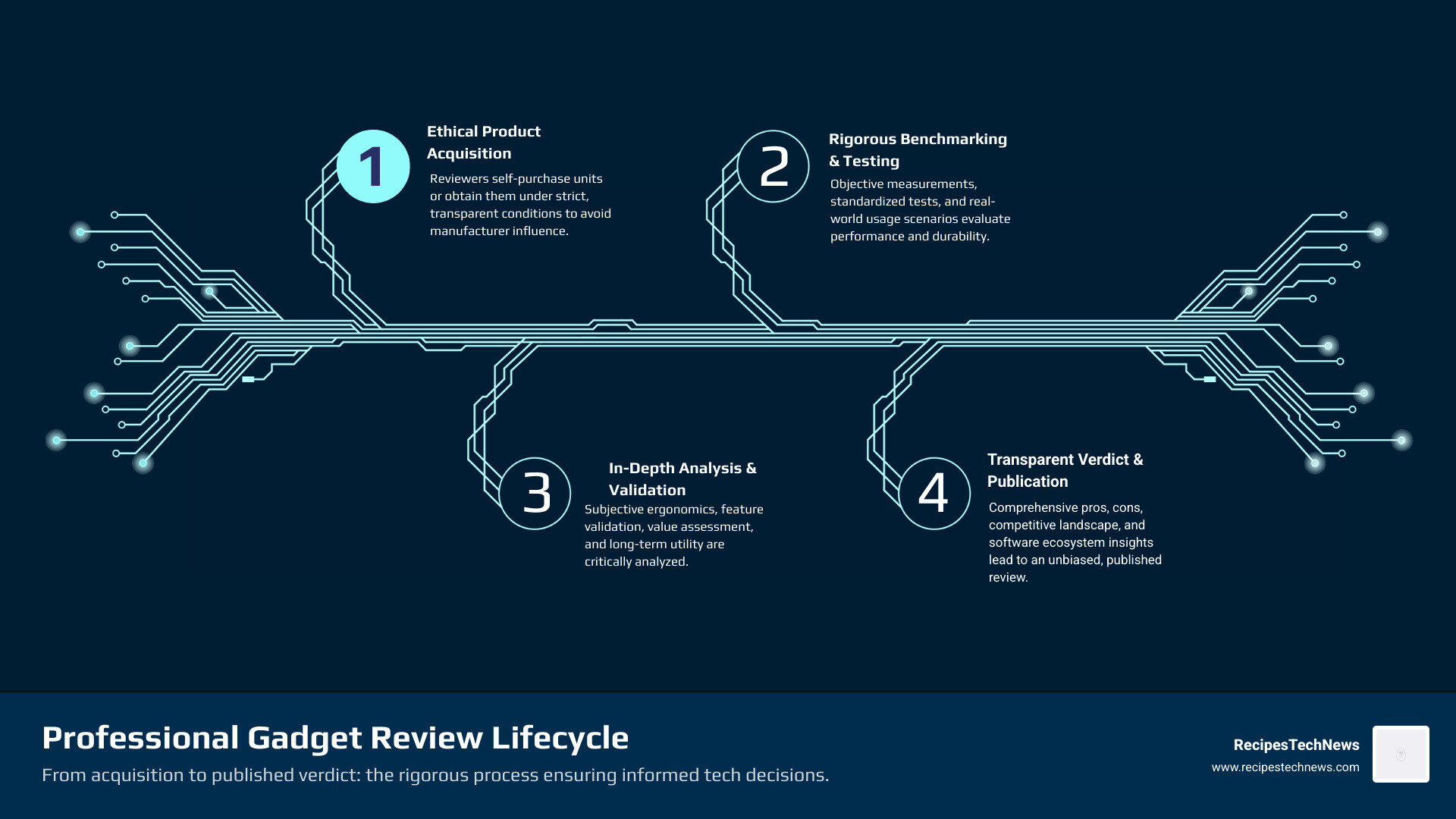
The Evolution and Primary Purpose of Gadget Reviews
The primary purpose of gadget reviews is to bridge the gap between manufacturer promises and the actual user experience. In the early days of tech journalism, reviews were often just a list of specifications. Today, as we move through April 2026, the landscape has shifted toward “lifestyle validation.” Consumers don’t just want to know the processor speed; they want to know if a laptop can survive a full workday in a coffee shop or if a new projector is bright enough for a vanlife movie night.

Informed decision-making is the heartbeat of this industry. High-quality reviews provide:
- Real-world utility: Testing devices in scenarios they were built for, like using the TCL’s PlayCube projector is more fun than a Rubik’s Cube | The Verge during a two-month road trip.
- Feature validation: Ensuring that “AI-enhanced” features actually improve performance rather than just being marketing buzzwords.
- Performance benchmarking: Using standardized tools to compare how one device stacks up against its direct competitors.
- Value assessment: Determining if a $1,300 smartphone offers enough of an upgrade over a $700 model to justify the cost.
For those of us building a modern home, these reviews are essential for curating The Essential Smart Kitchen: Smart Devices, where compatibility and reliability are more important than raw power.
The Role of AI in Modern Gadget Reviews
As of 2026, AI has become a double-edged sword in the review space. Professional teams now use automated testing scripts to simulate years of use in just a few weeks, helping to predict the longevity of batteries and hinges. Data synthesis allows reviewers to analyze thousands of user comments to see if common “out of the box” failures are appearing. However, we must be wary of generative summaries that lack the soul and nuance of a human who has actually touched the device.
Identifying Bias in Online Gadget Reviews
Not every “review” you read is an objective evaluation. To protect yourself, look for:
- Affiliate transparency: Reputable sites clearly state if they earn a commission from your purchase.
- Sponsored content labels: If a brand paid for the “review,” it’s an advertisement, not an evaluation.
- Disclosure standards: Expert reviewers will tell you if the manufacturer provided the unit or if they bought it themselves.
- Review aggregation: Don’t rely on a single source. Check “Expert Scores” that weight different publications based on their historical accuracy and trust ratings.
How Professional Teams Conduct Gadget Reviews
When you read a professional review, you’re seeing the result of an incredibly dense process. Top-tier testing facilities can span 40,000 sq. ft., housing specialized labs for everything from sound acoustics to vacuum suction. Some teams have accumulated over 196,000 hours of testing across 16,000+ reviews, creating a massive database of comparative data.

Professional testing involves:
- Objective measurements: Using colorimeters to check the nits and color accuracy of a screen, like in the Sony Bravia 8 II OLED TV review: a TV enthusiast’s dream | The Verge , which measured a staggering 1,884 nits in small highlights.
- Subjective ergonomics: How does the device feel? Is the remote intuitive? Is the laptop hinge too stiff?
- Standardized test benches: Testing every product in a category using the exact same steps to ensure the results are comparable.
- Environmental stress testing: Operating gadgets in extreme heat, cold, or humidity to find the breaking point.
Specialized Testing for Home Appliances
Testing a robot vacuum is vastly different from testing a phone. Experts measure “suction power” using measured amounts of debris like rice and sugar. They also track battery depletion over multiple cleaning cycles. For example, the Eufy Omni E28 Review: A Good Vacuum That Tries to Do Too Much revealed that while the vacuuming was solid, the noisy dock and mediocre mopping held it back from greatness. Even kitchen tools like those found in The Ultimate Guide to Silky Smooth Blender undergo decibel level testing to ensure they won’t wake the whole house during a morning smoothie run.
Mobile and Computing Performance Metrics
In laptops, we look at more than just “how fast it feels.” We use Geekbench 6 to measure multi-threaded CPU tasks. A great example of this is the Asus Zenbook A16 review: a formidable MacBook Air alternative | The Verge , which showed that its Snapdragon X2 Elite Extreme chip could actually beat some Apple rivals in specific benchmarks. We also monitor thermal throttling—how much a computer slows down when it gets hot—and “Windows on Arm” compatibility to see which apps might not work on the latest hardware.
Ensuring Objectivity and Independence in Tech Evaluations
The biggest challenge in gadget reviews is maintaining independence. If a manufacturer sends a “cherry-picked” unit to a reviewer, it might perform better than the one you buy at the store. To combat this, some of the most respected organizations buy every single product they test at retail, just like a regular consumer would.
Radical transparency is the gold standard. This includes:
- Self-purchasing units: Eliminating the “reviewer’s bias” that comes from free samples.
- No manufacturer influence: Refusing to let brands see reviews before they are published.
- Community-driven selection: Letting the audience vote on which products should be tested next.
- Investigative journalism: Exposing industry secrets, such as the investigation that suggested 75% of reviews on certain platforms might be fake.
Sustaining Operations Without Compromising Ethics
How do review sites pay for 40,000 sq. ft. labs? Most use a mix of subscription models, where members pay for early access to data, and affiliate revenue. The key to integrity is ensuring that the editorial team—the people writing the reviews—never sees the affiliate data. Their job is to tell the truth; the business team’s job is to keep the lights on.
The Importance of Expert Reviewer Credentials
Experience matters. A team with 328 years of combined experience has seen every tech trend come and go. They have the historical context to know if a “revolutionary” new feature is actually just a rehash of a failed idea from 2008. Technical certifications in fields like ISF (for TVs) or audio engineering ensure that the “expert” isn’t just someone with a camera, but someone with the credentials to back up their claims.
Essential Elements of High-Quality Gadget Reviews
When you are reading a review, you should expect a comprehensive breakdown. A high-quality review isn’t just an opinion; it’s a data-rich document.
| Feature | Professional Review | User-Generated Content |
|---|---|---|
| Testing Methodology | Standardized, repeatable lab tests | Anecdotal, varying conditions |
| Equipment | Colorimeters, decibel meters, oscilloscopes | “My eyes and ears” |
| Context | Compared against 10+ similar products | Often the only device they own |
| Integrity | Conflict of interest disclosures | Often unverified or sponsored |
Technical Specifications and Real-World Use Cases
A great review balances the “specs” with the “story.” For instance, knowing a projector has 650 ANSI Lumens is important, but hearing that Anker’s Nebula P1 projector is the portable sound king | The Verge works great as a Bluetooth speaker even with the lamp off gives you a better idea of its versatility. You want to see the “pros and cons” clearly listed, a look at the competitive landscape, and a deep dive into the software ecosystem.
Audio and Visual Fidelity Standards
For home theater enthusiasts, the details are everything. Reviews should cover:
- ANSI Lumens: The true measure of brightness for projectors.
- QD-OLED processing: How well a TV handles motion and upscaling.
- Frequency response: Whether headphones deliver deep bass or crisp highs.
- Color accuracy: Checking if the “red” on the screen is the “red” the director intended.
Portability and Power Management
In our mobile world, battery life is king. We look at battery cycle life and whether a device supports USB-C Power Delivery (PD) standards for fast charging. The weight-to-performance ratio is also vital—nobody wants a powerful laptop that weighs as much as a brick. Finally, IP weather ratings tell us if our gadgets can survive a splash at the pool or a dusty hike.
Future Trends and Challenges in the Review Space
The future of gadget reviews is being shaped by new technologies and shifting consumer values. One of the most exciting (and terrifying) trends is the rise of 3D digital clones and AI agents that can interact with users to provide personalized tech advice.
Other trends we are watching closely include:
- The Matter Protocol: A new standard that finally lets smart home devices from different brands talk to each other.
- Sustainable Tech: Reviewers are now giving “Right-to-Repair” scores, penalizing companies that glue batteries shut or use proprietary screws.
- Data Privacy Referendums: As users become more wary of how their data is used, reviews must evaluate the privacy policies of smart gadgets.
- Global Supply Chain Issues: RAM shortages and satellite connectivity (with 15,000+ satellites now in orbit) are changing how we evaluate the “value” and “connectivity” of new devices.
Frequently Asked Questions about Gadget Reviews
How do I know if a gadget review is trustworthy?
Look for a detailed testing methodology. If the reviewer explains how they tested the battery or what tools they used to measure the screen, they are likely more trustworthy than someone just giving a “vibes-based” opinion. Also, check for a history of critical reviews—if a site gives every product a 10/10, they aren’t being honest.
Why do different sites give the same product different scores?
Different publications have different priorities. One site might value “raw power” above all else, while another might prioritize “value for money” or “design.” Reading multiple reviews helps you find the one that aligns with your specific needs.
Do reviewers get to keep the products they test?
In most professional settings, no. Review units are usually sent back to the manufacturer or, in the case of sites that buy their own gear, sold off or kept in a permanent library for future comparison testing. If a “reviewer” on social media keeps every product they “review,” they are likely an influencer, not a journalist.
Conclusion
At RecipesTechNews, we believe that the right piece of technology can genuinely enhance your life, whether it’s finding the perfect blender for a healthy morning routine or a laptop that lets you work from anywhere in the world. Our mission is to provide a tech-lifestyle fusion that empowers you with data-driven insights and practical guides.
The world of gadget reviews is complex, but by understanding the work that goes on behind the scenes, you can navigate the market with confidence. The best gadget isn’t necessarily the one with the highest specs—it’s the one that fits seamlessly into your life.