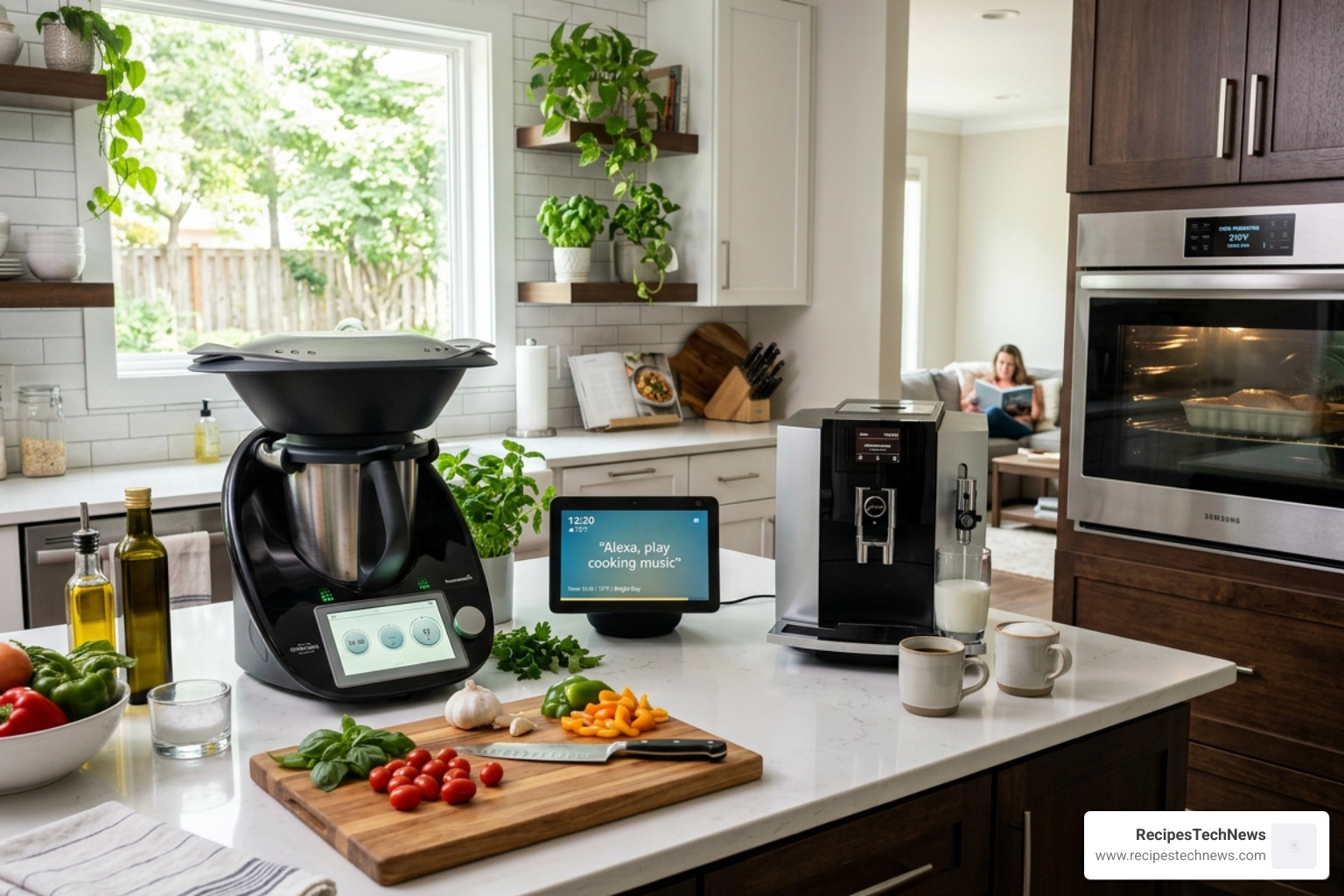
The Best Smart Devices for Kitchen Success in 2026
The best smart devices for kitchen upgrades in 2026 include:
- Thermomix TM7 – All-in-one cooking robot with 100,000+ guided recipes (~$1,699)
- Samsung Family Hub Refrigerator – Smart fridge with internal cameras, food tracking, and recipe suggestions
- June Oven – 12-in-1 countertop oven with AI food recognition and HD camera
- Anova Precision Cooker – App-controlled sous vide cooker for perfectly cooked proteins
- Meater+ Wireless Thermometer – Hands-free meat monitoring with app notifications
- Moen Smart Faucet – Hands-free, voice-activated water dispensing with precise measurements
- xBloom Studio – Automated pour-over coffee maker with whole bean grinding
- Ecozy Nugget Ice Maker – Voice-controlled countertop ice maker producing up to 35 lbs/day
The kitchen has quietly become one of the most exciting rooms in the house for technology. Smart appliances have moved well beyond novelty — they now handle real cooking tasks, reduce food waste, and save meaningful time every week.
But here’s the honest picture: smart kitchen products still make up just 2% of the total global kitchen market. Most home cooks haven’t made the switch yet — often because the options feel overwhelming, expensive, or hard to compare.
That’s exactly what this guide fixes.
We’ve broken down the top-rated smart kitchen devices by category, price, and real-world usefulness — so you can find what actually fits your kitchen and your life.
One important insight from real users: the best smart kitchen tools do a few things exceptionally well, rather than trying to automate everything at once. A smart thermometer that tells you when your roast is done? Genuinely useful. An oven that tries to replace your cooking instincts entirely? Often frustrating.
Keep that filter in mind as you read.
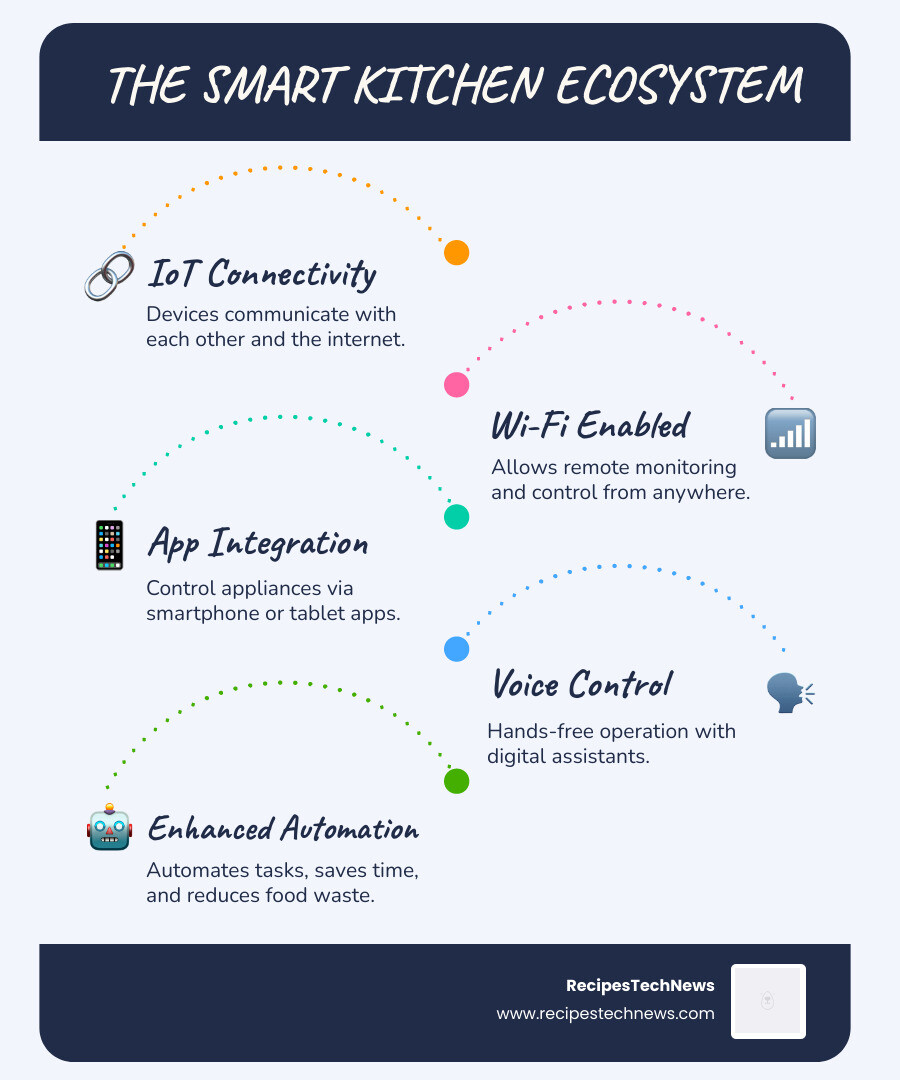
Defining the Modern Smart Kitchen
When we talk about a “smart kitchen,” we aren’t just talking about a kitchen with a fancy toaster. A truly modern smart kitchen is defined by connectivity and the seamless integration of the Internet of Things (IoT). In our view, an appliance becomes “smart” when it gains the ability to communicate—either with you via your smartphone or with other devices in the house.
Most smart devices for kitchen success are Wi-Fi enabled, allowing for remote monitoring and control. Imagine being stuck in traffic and using your phone to preheat the oven so it’s ready the moment you walk through the door. Or, better yet, receiving a notification on your smartwatch that the dishwasher has finished its cycle and the dishes are dry.
Artificial Intelligence (AI) has also taken a seat at the table. Modern devices use AI-powered sensors to recognize the ingredients you’re using, adjust cooking temperatures automatically, and even suggest recipes based on what is currently sitting in your fridge. This level of automation is a cornerstone of The Essential Smart Kitchen Smart Devices that we recommend for those looking to modernize.
The benefits go beyond just “cool” tech. Integrating these devices leads to:
- Culinary Efficiency: Multi-tasking becomes easier when your appliances handle the “watching” for you.
- Healthier Cooking: Precision temperature control ensures nutrients are preserved and food is never over-processed.
- Food Waste Reduction: Smart fridges track expiration dates, helping us use what we have before it goes bad.
- Voice Control: Integration with Alexa and Google Assistant means you can operate your kitchen hands-free—a lifesaver when your hands are covered in flour.
Top-Rated Smart Devices for Kitchen Success in 2026
The market for smart appliances is growing rapidly, with projections suggesting a valuation of $76.2 billion by 2033. To help you navigate this crowded space, we have compiled a list of the top performers currently available.
| Device Category | Top Recommendation | Key Feature | Approx. Price |
|---|---|---|---|
| All-In-One Robot | Thermomix® TM7™ | 100,000+ Guided Recipes | $1,699 |
| Countertop Oven | June Oven | AI Food ID & HD Camera | $600 – $1,000 |
| Sous Vide | Anova Precision Cooker | Remote App Control | $150 – $200 |
| Smart Fridge | Samsung Family Hub+ | Internal AI Cameras | $3,000+ |
| Coffee Maker | xBloom Studio | Pour-over Automation | $500+ |
The Power of the Thermomix® TM7™
The Thermomix® TM7™ Kitchen Robot | The All-In-One Cooking Solution is perhaps the most significant “prosumer” device on the market. It replaces over 20 traditional appliances, including blenders, scales, and steamers. Its standout feature is the 10-inch vivid display that connects directly to Cookidoo, a platform with over 100,000 guided recipes. The TM7 doesn’t just follow instructions; it uses smart sensors to “think” like a sous chef, adjusting heat and speed to ensure perfect results every time.
The Intelligence of the June Oven
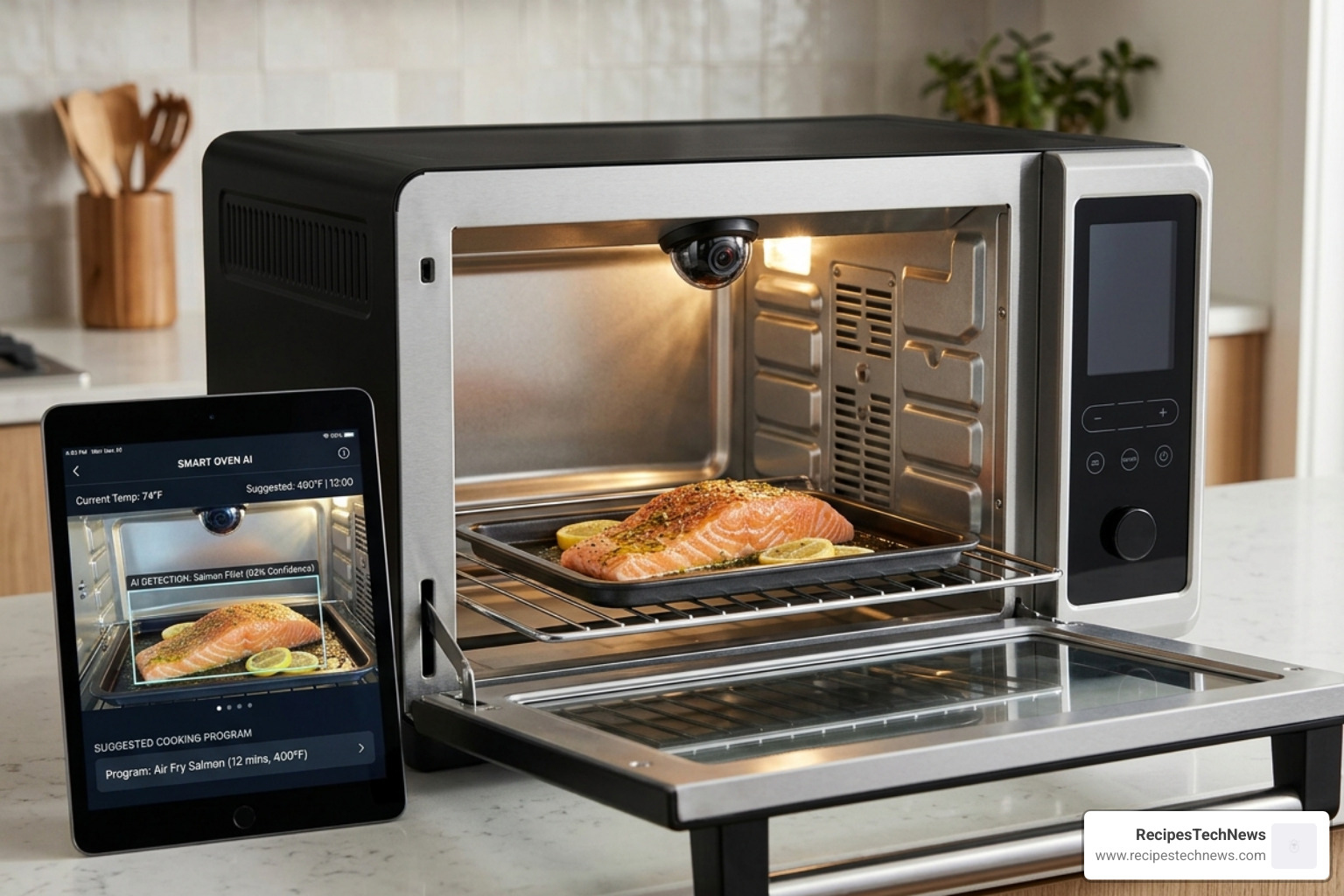
If you want an oven that knows what you’re cooking better than you do, the June Oven: 12-in-1 Countertop Convection Oven is a top contender. Using its internal HD camera and Food ID technology, it can recognize a bagel, a piece of salmon, or a tray of cookies the moment you slide them in. It then suggests the perfect cooking program. We love the “Virtual Rotisserie” feature, which uses six individually controlled heating elements to mimic a rotating spit without the messy hardware.
Precision and Monitoring
For those who aren’t ready to replace their entire oven, the Meater+ wireless thermometer and the Anova Precision Cooker offer affordable entry points into the smart kitchen. The Meater+ allows you to monitor the internal temperature of your steak from your couch, while the Anova brings professional-grade sous vide cooking to any pot in your kitchen. If you are looking for more high-tech blending options to pair with these, check out The Ultimate Guide to Silky Smooth Blender for our latest reviews.
Essential Smart Devices for Kitchen Efficiency
Efficiency in the kitchen isn’t just about how fast you cook; it’s about how well you manage your resources. Inventory management is a major hurdle for many families, which is why the Samsung Family Hub+ has become a staple in high-end smart kitchens. Its internal cameras allow you to see inside your fridge from the grocery store, preventing the “do we have eggs?” dilemma.
Automation has also reached our morning routines. The Café Affetto smart espresso machine allows you to start your brew from bed via an app, ensuring your caffeine is ready when your feet hit the floor.
Even the kitchen sink has seen an upgrade. Smart faucets, such as those from Moen, offer hands-free operation and voice-activated water dispensing. You can tell your faucet to “dispense two cups of 100-degree water,” and it will do so with surgical precision. This is particularly useful for baking or filling baby bottles where temperature and volume are critical.
For those who want a truly integrated experience, the Thermomix® TM7™ Kitchen Robot | The All-In-One Cooking Solution offers automated alerts that sync with your devices, letting you know exactly when each stage of a multi-course meal is ready.
Specialized Smart Devices for Kitchen Enthusiasts
For the culinary hobbyist, there are specialized tools that take niche cooking methods and make them accessible through technology.
- Sous Vide: The Anova Nano is a compact, affordable version of the classic immersion circulator, perfect for small kitchens.
- Ice Enthusiasts: The Ecozy nugget ice maker has gained a cult following. It produces that “crunchy” ice found in fast-food chains and can be controlled via voice commands.
- Coffee Connoisseurs: The xBloom Studio is a marvel of pour-over automation. It grinds whole beans and manages water flow and temperature with a level of customization usually reserved for professional baristas.
- Sustainability Tech: The Mill smart composter is changing how we handle waste. It dries and grinds food scraps overnight, reducing kitchen waste by half and turning it into a shelf-stable material that can be returned to the soil or sent back to the manufacturer for repurposing.
Enthusiasts often look for devices that offer deep software integration, which is a hallmark of the Thermomix® TM7™ Kitchen Robot | The All-In-One Cooking Solution . Its ability to handle simultaneous cooking—steaming veggies in the Varoma while simmering a sauce in the bowl—is a game-changer for complex meal prep.
Planning and Choosing Your Smart Kitchen Investment
Building a smart kitchen is an investment, both in money and in time. With the market growing at a CAGR of 16.3%, there is no shortage of options, but we recommend a measured approach.
1. Interoperability is Key The biggest frustration for early adopters has been “ecosystem silos”—where your LG dishwasher won’t talk to your Samsung fridge. However, the tide is turning. We are seeing a push for Matter support and the Home Connectivity Alliance, which aim to create a universal language for all smart home devices. When shopping, look for devices that are “Matter-enabled” to future-proof your investment.
2. Cost-Benefit Analysis Do you really need a $3,000 fridge? For some, the time saved on grocery planning and the reduction in food waste justifies the cost. For others, starting small with a smart thermometer or a Thermomix® TM7™ Kitchen Robot | The All-In-One Cooking Solution provides more immediate value.
3. Setup Complexity Consider your “tech-tolerance.” Some devices are plug-and-play, while others require a stable mesh Wi-Fi network and multiple app configurations. If you aren’t comfortable troubleshooting a Wi-Fi connection, you might prefer devices with robust onboard controls that don’t require the app to function.
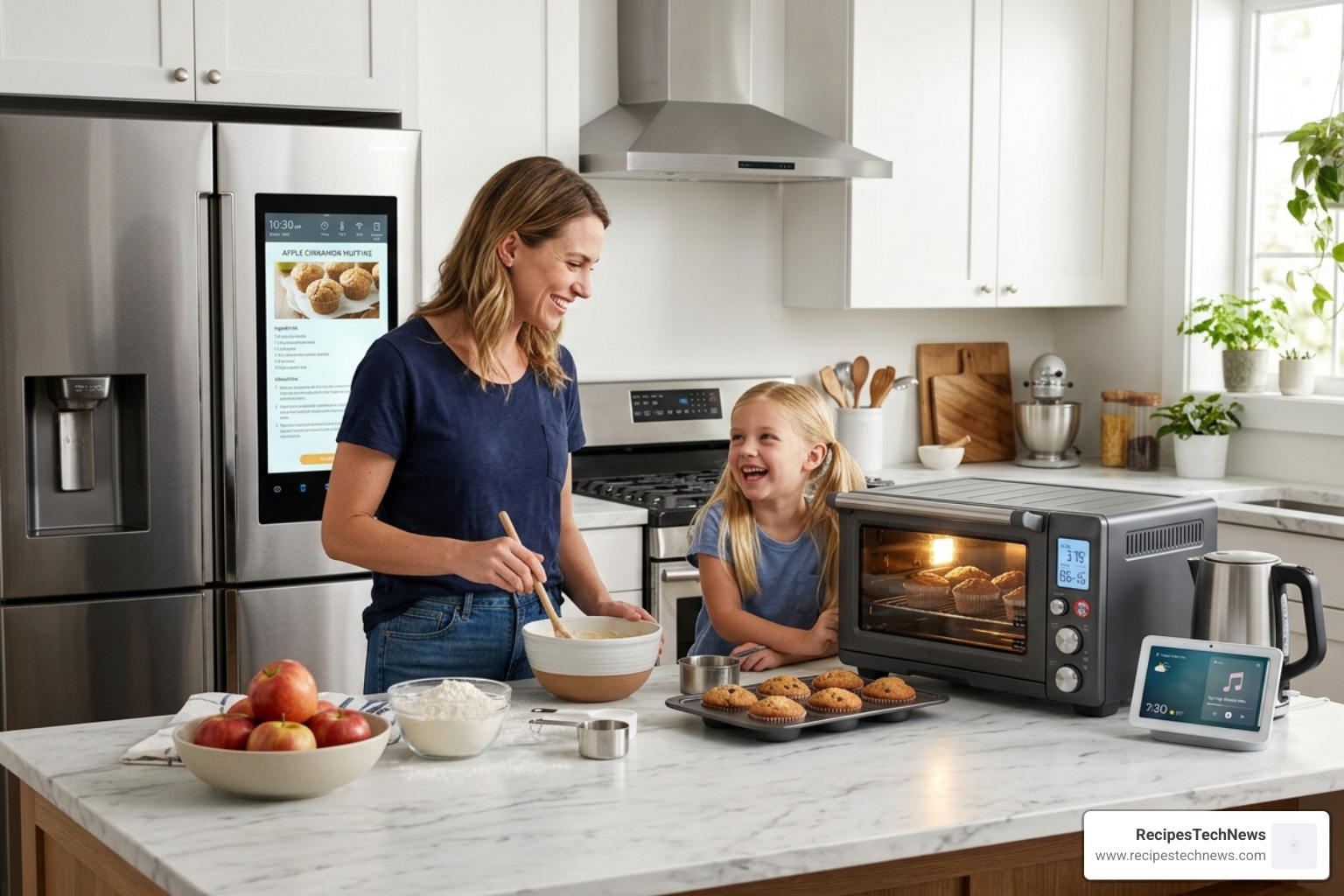
The Future of AI and Software in the Kitchen
As we look toward the late 2020s, the “smart” in smart kitchen will increasingly refer to software rather than hardware. We are entering the era of software-defined appliances.
Imagine an induction cooktop that doesn’t just heat up, but uses AI sensors from companies like NXP to detect if a pot is about to boil over and lowers the temperature automatically. Or counters with built-in wireless charging that can power your blender without a single cord in sight.
Predictive maintenance will also become standard. Your dishwasher will likely notify you that a pump is about to fail before it actually breaks, allowing you to schedule a repair and avoid a flooded kitchen. We expect to see more cross-brand communication, where your Thermomix® TM7™ Kitchen Robot | The All-In-One Cooking Solution can tell your smart oven to start preheating because the prep work is almost done.
Sustainability will also be a major driver. Future smart kitchens will likely include automated grocery replenishment systems that prioritize local, seasonal produce and packaging-free options, further reducing our environmental footprint.
Frequently Asked Questions about Smart Kitchens
What makes an appliance “smart” compared to traditional models?
A traditional appliance is “dumb”—it performs a task when you press a button. A smart appliance is connected to the internet and often uses sensors or AI to optimize that task. The main differences are remote control, notifications, and the ability to receive software updates that improve the device over time.
Are smart kitchen devices a worthwhile investment for the average home?
They are best suited for people who cook frequently and value time-savings or precision. If you rarely cook at home, a smart oven might be overkill. However, for a busy family, the ability to monitor a meal remotely or follow a guided recipe can significantly reduce the stress of daily meal prep.
How do I handle interoperability issues between different smart brands?
The best strategy is to stick to a single ecosystem (like Google Home or Alexa) where possible, or look for devices that support the Matter standard. Many manufacturers are now joining the Home Connectivity Alliance to ensure their apps can control other brands’ appliances.
Conclusion
At RecipesTechNews, we believe that technology should serve the cook, not replace them. Whether you are looking for a complete kitchen overhaul or just a few smart devices for kitchen efficiency, the goal is to make your life easier and your food better.
The future of the kitchen is connected, intuitive, and increasingly sustainable. By choosing the right tools today, you are future-proofing the heart of your home. We invite you to explore our in-depth gadget reviews and digital guides to stay ahead of the curve.