Why a Portable Blender for Travel Is a Game-Changer in 2026
A portable blender for travel is a compact, battery-powered blender you can use anywhere — no outlet needed. Here’s a quick snapshot of what you need to know:
Best portable travel blenders at a glance:
| Feature | What to Look For |
|---|---|
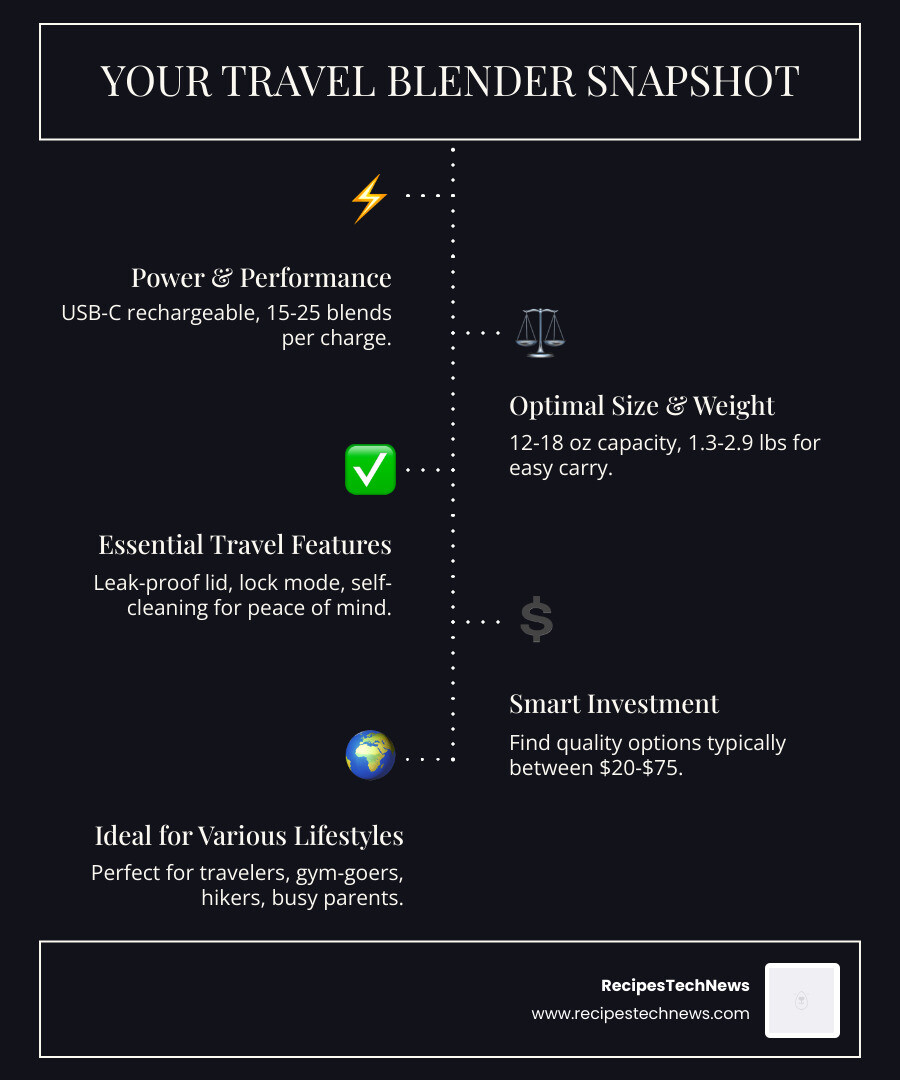
| Power source | USB-C rechargeable (15-25 blends per charge) |
| Capacity | 12 oz to 18 oz (personal serving size) |
| Weight | Around 1.3-2.9 lbs |
| Key features | Leak-proof lid, lock mode, self-cleaning |
| Price range | $20 to $75 |
| Top brands | Ninja, BlendJet, Hamilton Beach, Magic Bullet |
Staying healthy on the road used to mean compromising. You’d skip your morning smoothie, grab whatever was at the airport, and promise yourself you’d “get back on track” when you got home.
That’s changing fast.
Portable blenders have improved dramatically in recent years. Today’s models are lightweight, powerful enough to crush frozen fruit, and charge from a laptop or power bank just like your phone. With over 30,000 travel blender options now available on Amazon alone, the market has exploded to meet real demand.
Whether you’re a frequent flyer, a gym-goer, a hiker, or a busy parent — there’s a travel blender built for your lifestyle. This guide breaks down everything you need to know to find the right one.
Essential Features of a Portable Blender for Travel
When we look at the landscape of blending technology in April 2026, it is clear that “portable” no longer means “weak.” However, not all blenders are created equal for the rigors of the road. If you are tucked away in a hotel room or preparing a shake at a campsite, certain features become non-negotiable.
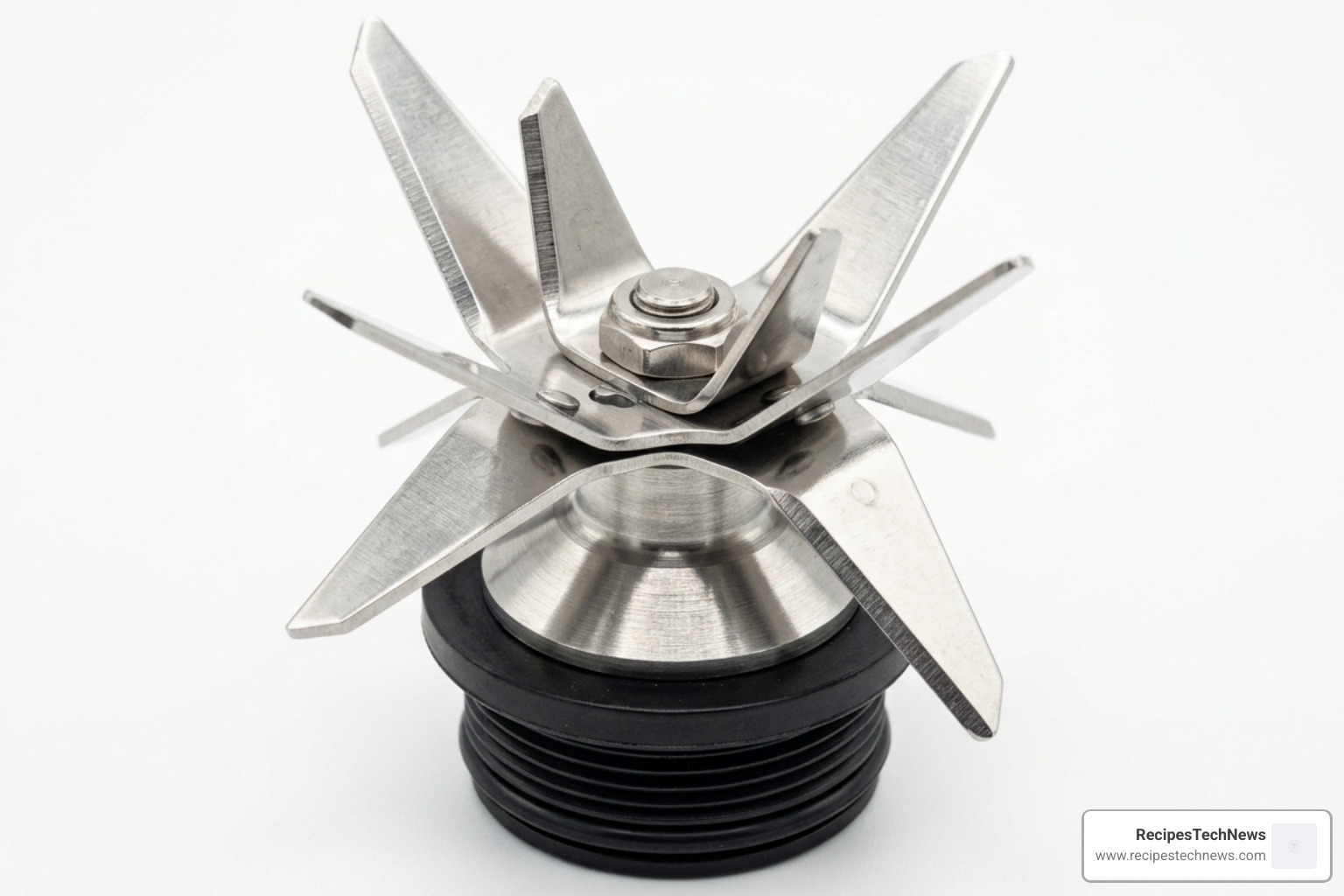
First and foremost, look at the blade system. Many modern portable blenders for travel now feature 6-blade stainless steel assemblies. These are often offset to create a “tornado effect,” pulling ingredients down into the vortex rather than letting them spin aimlessly at the top. This is a key component of The Ultimate Guide to Silky Smooth Blender results we all crave.
Material matters just as much as the blades. You want a jar made from BPA-free materials, such as Tritan plastic, which is shatter-resistant and lightweight. Since these gadgets will likely live in your carry-on or gym bag, durability is paramount. We also recommend looking for:
- Leak-proof lids: Essential for preventing “smoothie-soaked luggage” syndrome.
- Carrying straps: Integrated loops or handles make it easy to grab and go.
- Measurement markings: These help you follow recipes precisely without needing extra measuring cups.
- Compact dimensions: A standard travel blender is usually around 9 inches tall and 3 inches wide, fitting easily into side pockets of backpacks.
Choosing the Right Capacity for Your Trip
Capacity is a balancing act between satisfying your hunger and saving space in your suitcase. Most portable blenders for travel range from 12oz to 18oz (roughly 350ml to 500ml). This is generally considered the “sweet spot” for personal servings.
If you find that 16oz just doesn’t cut it after a heavy workout, some brands offer modularity. For instance, the BlendJet® 2 XL Jar allows you to swap out the standard container for a larger one while keeping the same motor base. For most travelers, however, the 500ml standard is ideal because it remains cup-holder compatible, fitting perfectly into the center console of a rental car or the side pocket of a hiking pack.
Safety and Security: Lock Mode and TSA Compliance
Safety is often overlooked until your blender accidentally turns on inside your suitcase, turning your clean clothes into a vibrating mess. This is why “Lock Mode” is a must-have feature. High-quality models like the BlendJet® 2 Portable Blender – The Next-Gen Blender® include a locking mechanism that prevents the blades from spinning unless you specifically disengage it.
From a security standpoint, battery safety is also vital. Most travel blenders use lithium-ion batteries, which are generally allowed in carry-on luggage but may be restricted in checked bags depending on the airline. Always check current TSA and airline regulations before heading to the airport. The blades themselves are usually fixed within the base or jar; while they are sharp, they are generally permitted in carry-on luggage as long as the blender is fully assembled, though some agents may ask to inspect them.
Power Sources and Charging on the Go
The death of the proprietary charging brick is one of our favorite trends of 2026. Almost all top-tier portable blenders for travel have moved to USB-C recharging. This means you can charge your blender using the same cable as your laptop, tablet, or smartphone.
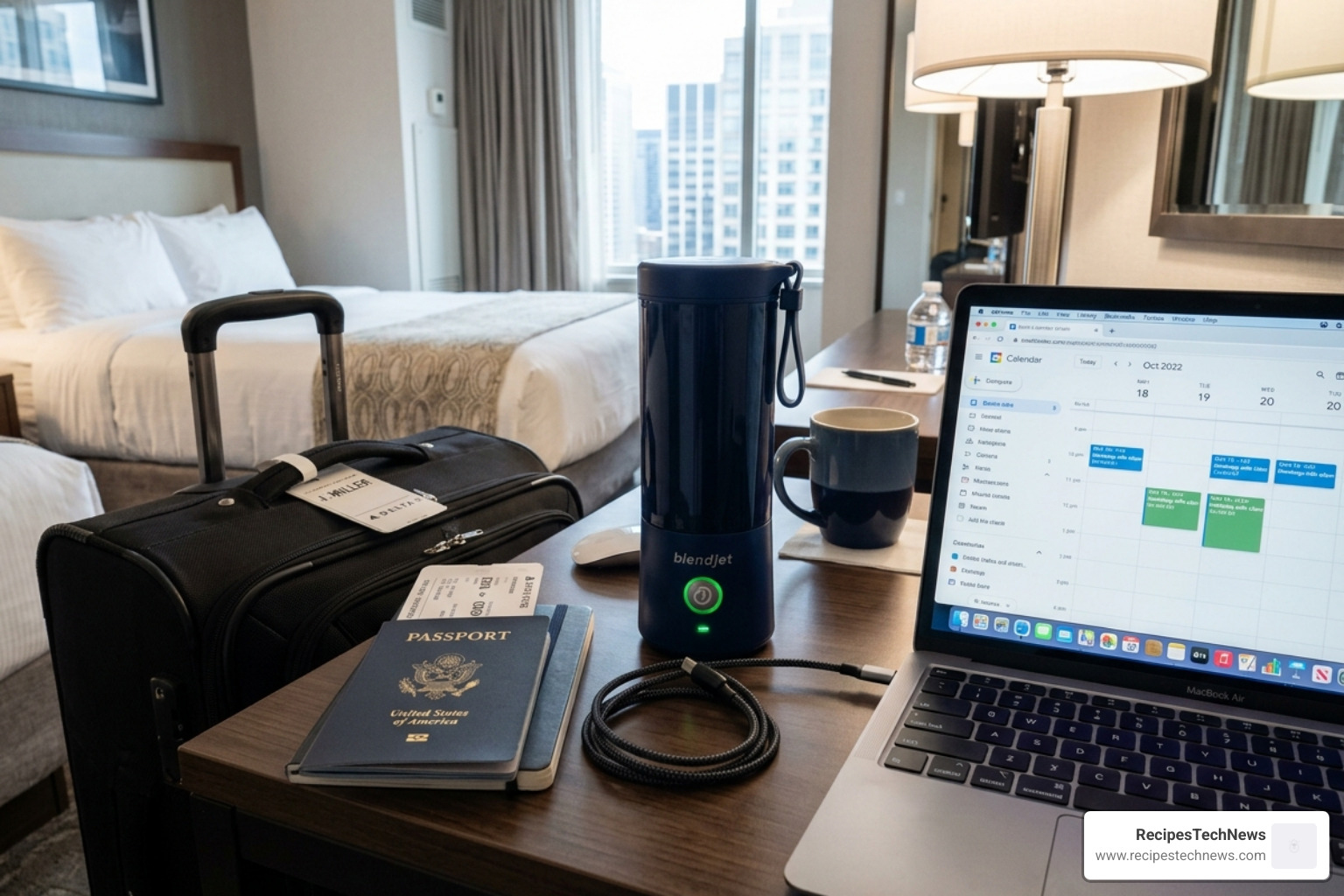
Battery life has also seen a massive jump. We are seeing 4000 mAh batteries becoming the industry standard, providing anywhere from 15 to 25 blends per single charge. The BlendyGo 3 – Original Portable Blender, for example, boasts up to 25 uses on one full charge.
Charging times have also plummeted. You can typically reach a full charge in about 2 to 2.5 hours. If you are really in a pinch, these devices can be powered up via:
- Wall outlets (with a standard USB adapter)
- Laptops or desktop computers
- Portable power banks
- Car USB ports
Many models now include LED battery indicators that change color (usually from red to blue or green) to let you know exactly how much “juice” you have left before your next smoothie.
Versatility: What Can You Make with a Portable Blender for Travel?
Don’t let the “smoothie” label fool you. A portable blender for travel is essentially a miniature food processor. While fruit shakes and protein drinks are the bread and butter of these devices, their utility goes much further. If you’re looking for inspiration, our Recipes section is packed with ideas that work perfectly in a compact format.
Beyond the basic protein shake, a high-quality Personal Portable Blender – Cuisinart can handle:
- Iced Coffee & Frappes: Perfect for that mid-afternoon caffeine kick in a hotel room.
- Baby Food: A lifesaver for parents who want to ensure their toddlers get fresh nutrients while on vacation.
- Pulse Mode Tasks: Many blenders now offer a “pulse” function, allowing you to create chunky salsas, guacamole, or even pesto.
- Breakfast Prep: You can whip up pancake or waffle batter in seconds, then pour it straight from the blender jar onto the griddle.
- Salad Dressings: Emulsify oils and vinegars for fresh dressings that beat any store-bought packet.
Top Brands and Price Points in 2026
The market for portable blenders for travel is more competitive than ever, which is great news for our wallets. You can find reliable options ranging from $20 to $75, depending on the power and brand prestige.
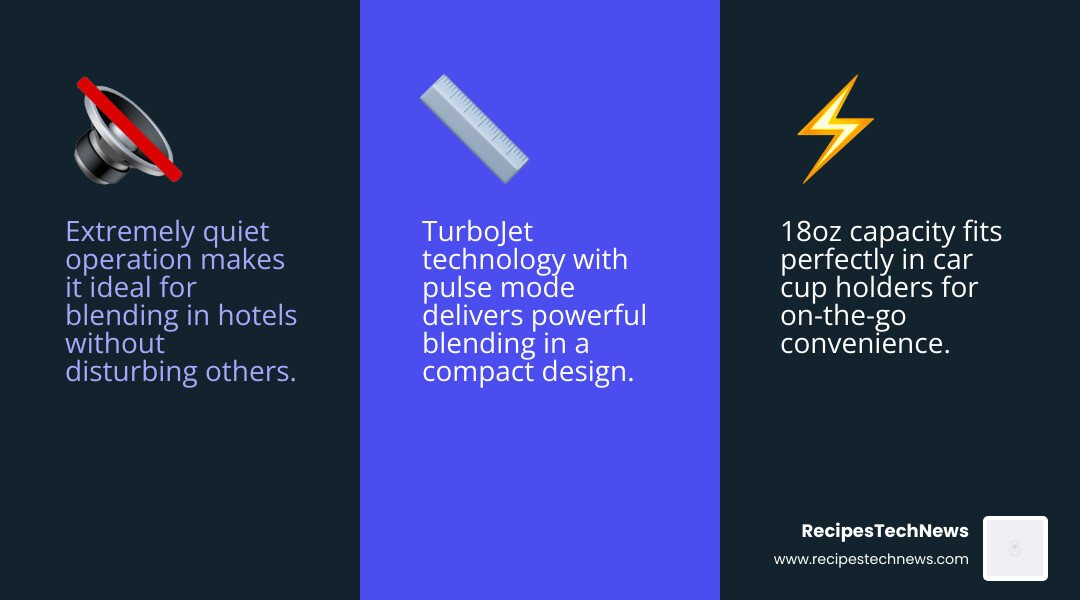
| Brand/Model | Approx. Price | Key Highlight |
|---|---|---|
| Ninja Blast | $50 – $60 | Extremely quiet; 18oz capacity; fits car cup holders. |
| BlendJet 2 | $45 – $50 | Massive color variety; TurboJet technology; pulse mode. |
| Hamilton Beach 51171 | $20 – $25 | Ultimate budget pick; corded but highly compact for hotel use. |
| Magic Bullet Portable | $30 – $40 | Trusted brand; simple one-touch operation. |
| Cuisinart Blast & Go | $70 – $75 | Premium build; high RPM motor; 3-year warranty. |
For those looking for the latest innovations, we recommend keeping an eye on The Essential Smart Kitchen Smart Devices for updates on how AI and smart sensors are beginning to integrate into even these small appliances.
The Best High-Performance Portable Blender for Travel
If you are a power user who blends ice, nuts, or frozen kale daily, you need a high-performance model. Technologies like “TurboJet” or “BlendPro” are what set the premium models apart. These blenders often feature motors spinning at 20,000 RPM or higher.
The Blast & Go Portable Blender | PBL100U | Cuisinart is a prime example of this “pro-sumer” travel gear. With blades spinning up to 275 times per second, it offers the kind of consistency you’d expect from a full-sized countertop unit. “PulseMotion” technology is another feature to look for, as it helps move stubborn frozen chunks toward the blades, preventing the motor from stalling.
Cleaning and Maintenance While Traveling
One of the biggest hurdles to healthy habits is the cleanup. Nobody wants to scrub a blender in a tiny hotel sink. Fortunately, the “self-cleaning” feature is now standard in most quality portable blenders for travel.
To clean your blender on the go:
- Fill the jar about halfway with warm water.
- Add a single drop of dish soap.
- Run a full blending cycle (the “tornado” effect will scrub the walls and under the blades).
- Rinse thoroughly and let it air dry.
For a deeper clean, many models feature dishwasher-safe jars and lids. If you are adventurous (think camping or beach trips), look for a blender with an IPX7 waterproof rating. This means the base is water-resistant, protecting the USB port and internal electronics from splashes. Accessories like the BlendJet® 2 Portable Blender – The Next-Gen Blender® also help keep things tidy by providing specialized drinking lids that minimize spills.
Pros and Cons: Portable vs. Traditional Blenders
Is a portable blender for travel a total replacement for your kitchen powerhouse? Not necessarily. Here is how they stack up:
Pros:
- Cordless Freedom: Blend at the gym, in the car, or on a hiking trail.
- Lightweight: Most weigh between 1.3 and 1.5 lbs, which is less than a loaf of bread.
- Space-Saving: Perfect for dorm rooms, tiny apartments, or cluttered suitcases.
- Quiet Operation: Generally much quieter than a 1500-watt countertop beast—perfect for early mornings in a shared hotel room.
Cons:
- Lower Wattage: They won’t blend a whole raw beet or a massive bag of ice as smoothly as a Vitamix.
- Smaller Capacity: You are limited to single-serving portions.
- Ingredient Prep: You usually need to cut fruit and veg into smaller chunks (about 1-inch pieces) to ensure a smooth blend.
Frequently Asked Questions about Travel Blenders
Can I take a portable blender for travel in my carry-on?
Yes, generally you can. However, the motor base contains a lithium-ion battery, which must stay in your carry-on (not checked baggage). While the blades are usually allowed if they are part of the assembled unit, some international security checkpoints may have stricter rules. It is always best to check with your specific airline.
How long does a full battery charge typically last?
Most modern blenders will give you 15 to 25 blends on a single charge. If you blend once a day, a single charge could easily last you through a two-week vacation!
Can these compact blenders actually crush ice and frozen fruit?
The short answer is yes—but with a caveat. You should use smaller ice cubes rather than large chunks, and it helps to add your liquid first to create a vortex. High-end models with 20,000+ RPM motors handle frozen ingredients significantly better than budget $20 models.
Conclusion
At RecipesTechNews, we believe that technology should serve your lifestyle, not complicate it. The rise of the portable blender for travel is a perfect example of this tech-lifestyle fusion. It removes the friction from eating healthy, allowing you to maintain your wellness routine whether you’re in a high-rise hotel in Tokyo or a tent in the Rockies.
By choosing a model with USB-C charging, a secure lock mode, and a high-speed motor, you’re investing in your health and your freedom. Ready to upgrade your kitchen (even the one in your suitcase)? Visit RecipesTechNews for more gadget guides and stay ahead of the curve. Happy blending, and even happier travels!